Author: Oswald D Smith

  • Security Guard App: Top Features Every Security Firm Should Know

    Security Guard App: Top Features Every Security Firm Should Know

    A security guard app is the mobile side of a guard management system. Officers use it to scan checkpoints, file incident reports, complete checklists and log visitors from the field, while supervisors see every entry in real time.

    Picking a guard management app isn’t exactly thrilling reading until you’re the one stuck untangling a missed patrol or a scheduling mix-up at 11 pm. Aves Security’s app was built around that exact headache. Honestly, once you look past the buzzwords, it comes down to a handful of features that actually make a security firm’s day-to-day easier to run.

    Why Every Security Firm Needs a Guard Management App

    Ask any security firm owner what eats up their week and you’ll hear the same handful of complaints. Guards are scattered across sites with nobody quite sure who’s where. Shifts that fall apart at the last minute because a swap never got logged anywhere.

    An incident that happened on Tuesday and you only hear about it Thursday, secondhand, from someone who wasn’t even there. That’s the gap a guard management app is supposed to close.

    Whether Aves Security actually pulls it off comes down to a handful of things it does well, so let’s walk through them.

    Real-Time Guard Tracking with the Aves Guard Management App

    Start with the basic question: do you actually know where your guards are right now? It sounds like something every firm should have figured out by now, but a lot of them still run on trust and the occasional check-in call.

    A guard wanders off post or a site sits empty for twenty minutes and the first anyone hears about it is a client emailing to ask what happened. Aves tracks guard locations in real time, so that kind of gap gets caught while it’s still small enough to fix quietly.

    How the Aves Guard Management App Provides Real-Time Guard Tracking

    Patrols are where paper really falls apart. Old-school logs get filled in from memory an hour or two after the round actually happened, if they get filled in at all. Aves has guards scan a QR code or tap NFC at each checkpoint instead.

    It’s a small habit to build, but it leaves an actual timestamp behind, proof the round happened rather than someone’s word for it after the fact.

    Guard Management App with QR Code and NFC Patrol Monitoring

    Incidents are similar. Memory doesn’t hold up well under stress and if a guard has to sit down and write everything out two hours later, details go missing.

    This app lets them log it on the spot, photo attached if it matters and it reaches the supervisor immediately instead of surfacing at the end of the shift when it’s too late to do much with it.

    Guard Management App for Instant Incident Reporting

    Scheduling is its own kind of pain if you’ve ever tried building rosters by hand. Someone gets double-booked without anyone noticing.

    A shift sits uncovered because the spreadsheet didn’t flag it. Aves catches these conflicts on its own and lets guards swap shifts without turning it into fifteen phone calls back to the office.

    Automated Compliance Reports for Faster Audits

    Then there’s compliance, which nobody enjoys dealing with until a client or regulator asks for proof that patrols actually happened on schedule. Digging through old binders isn’t a great look.

    With everything already logged, pulling a report together takes maybe ten minutes instead of eating your whole weekend.

    Centralized Dashboard with Actionable Security Insights

    The dashboard side of things is less flashy but still useful. Raw numbers on their own don’t tell you much. But noticing that one site keeps generating incidents or that a particular guard is always a few minutes late checking in, gives you something you can actually act on before it becomes a bigger problem.

    A User-Friendly Guard Management App for Every Security Guard

    None of this matters, though, if guards don’t open the app. That’s probably the most underrated part of choosing software like this: it has to be simple enough that people actually use it.

    Aves kept the interface straightforward enough that most guards figure it out within a shift or two, no manual required.

    Manage Multiple Security Sites from a Single Platform

    And if you’re managing more than one site or client, having it all live in one place instead of five different spreadsheets makes a real difference.

    You keep the site-level detail without losing the bigger picture of how the whole operation is running.

    How a Guard Management App Improves Daily Security Operations

    Put all of this together and it adds up to more than any single feature. Each one solves something narrow on its own a missed patrol, a slow report, a scheduling headache but combined, they shift how a firm operates day to day.

    Less time spent explaining after the fact what went wrong, more time catching things while they’re still fixable.

    Build Client Trust with Real-Time Security Proof

    There’s a client-facing side to this too, worth mentioning. Being able to point to the exact minute a checkpoint was scanned or how quickly an incident got handled, says more than any sales pitch could. It’s proof, not a promise and that’s usually what keeps a client from shopping around for someone else.

    Why Choose Aves Security’s Guard Management App?

    At the end of the day, this isn’t really about going paperless for the sake of it. It’s about closing the gaps that manual, paper-based systems leave wide open: missed rounds, slow responses, messy schedules, compliance scrambles nobody wants. Aves brings all of that into one place, built in a way that guards will actually use and managers can actually trust.

    Curious what it looks like in practice? Get in touch with Aves Security for a walkthrough.

    For more information on security best practices, visit ASIS International.

    What is a Guard Management App?

    A Guard Management App is a digital solution that helps security companies manage guard patrols, shift scheduling, incident reporting, attendance and real-time tracking from a single platform. It improves efficiency, accountability and overall security operations.

    How does the Aves Security Guard Management App improve patrol management?

    The Aves Security Guard Management App uses GPS, QR code and NFC technology to verify patrol checkpoints in real time. This ensures every patrol is completed on schedule and provides accurate records for supervisors and clients.

    Why should security companies use a Guard Management App?

    A Guard Management App reduces manual paperwork, prevents missed patrols, streamlines shift scheduling, enables instant incident reporting and improves communication between guards and supervisors.

    Can the Aves Security Guard Management App manage multiple security sites?

    Yes. The Aves Security Guard Management App allows security firms to monitor multiple client locations, assign guards, track patrols and generate reports from a centralised dashboard.

    Is the Aves Security Guard Management App suitable for small and large security firms?

    Yes. Whether you manage a small security team or a large enterprise with multiple sites, the Aves Security Guard Management App scales to support your operational needs while improving productivity and compliance.

    What are the key features of the Aves Security Guard Management App?

    Key features include:
    Real-time guard tracking
    QR code & NFC patrol verification
    Shift scheduling and attendance management
    Instant incident reporting
    Compliance reports
    Centralised dashboard and analytics

  • Guard Tour System: How Patrol Verification Protects You from Negligence Lawsuits

    Guard Tour System: How Patrol Verification Protects You from Negligence Lawsuits

    A guard tour system is the technology that proves a security officer actually walked their patrol. Officers scan checkpoints (QR, NFC or GPS) along the route, and every scan is timestamped into a record you can defend.

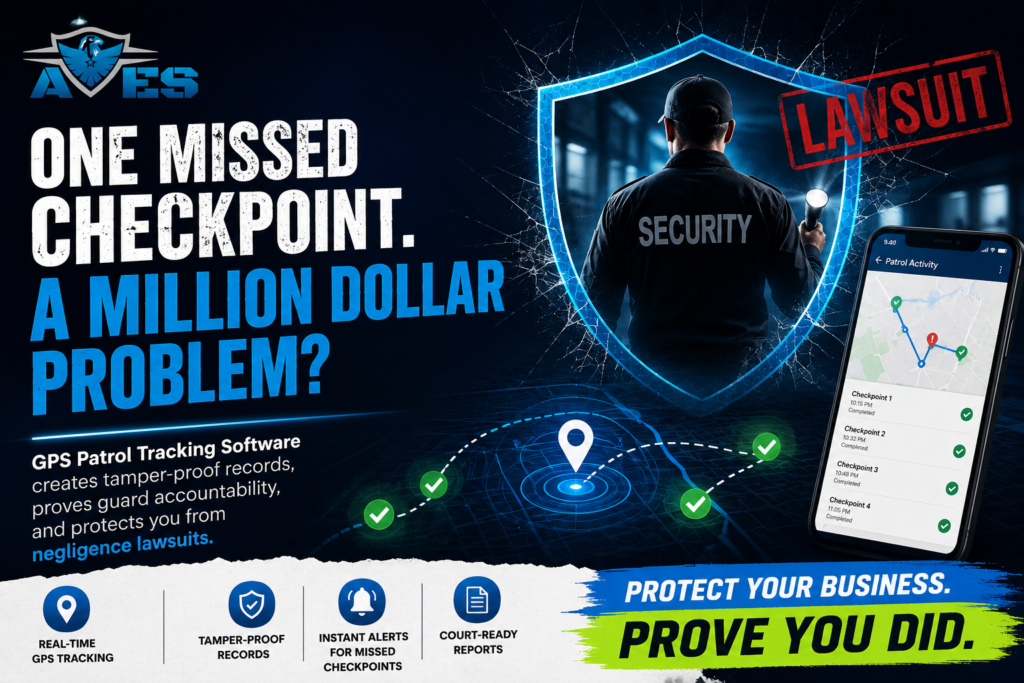
    Guard Tour System helps security companies reduce legal risks by providing real-time patrol verification GPS location tracking and tamper-proof digital records. These records help prove guard accountability and protect businesses from negligence lawsuits.

    A guard misses a checkpoint. Nothing happens for months. Then out of nowhere a break-in happens during that exact gap and now your company has one question to answer in court. Can you actually prove your guard was there?

    If your answer’s a paper logbook with a signature that could’ve been scribbled anywhere you already know how badly that goes.

    A guard tour system — also called a guard patrol system or patrol tracking system — is the technology that proves a security officer actually walked their round. Officers scan checkpoints (QR, NFC or GPS) as they go, and every scan is timestamped into a record you can defend.

    Why Paper Logs Don’t Hold Up Anymore

    Here’s something most security firms don’t like admitting. They usually don’t lose negligence cases because a guard messed up. They lose because they can’t prove the guard did things right in the first place.

    Look paper checklists get backdated all the time. Not because anyone’s trying to pull a fast one usually a shift runs long and someone fills it in from memory the next day. Lawyers know this. Insurers know it too. So the second a real dispute lands on the table paper records tend to fall apart.

    guard tour system takes that gray area off the table. Every checkpoint scan gets timestamped geo-tagged and locked in the moment it happens. No one’s going back later to quietly fix it up. Not the guard and not you.

    What Real Protection Actually Looks Like

    A patrol verification system worth its salt does three things a logbook never really could.

    Modern Guard Tour System creates an accurate digital record of every patrol making it much easier to defend against negligence claims.

    It proves the guard was physically there since GPS coordinates confirm someone stood in that spot not just that a box got checked somewhere on a form.

    It proves timing. Say a claim says the breach happened around 2 a.m.? Your records show exactly where your guard was standing at that hour down to the minute not some vague “overnight round completed” note.

    And it proves consistency which is the part people sleep on most. Courts and insurers care more about patterns than one nicely worded incident report. Weeks of steady on-time checkpoint scans tell a stronger story than a single clean summary written after the fact.

    Most owners only figure this out once something’s already gone wrong. It was never really about catching a guard slacking off. It’s about having proof for the days you did everything right because those are exactly the days someone ends up questioning.

    The Mistake Most Companies Make

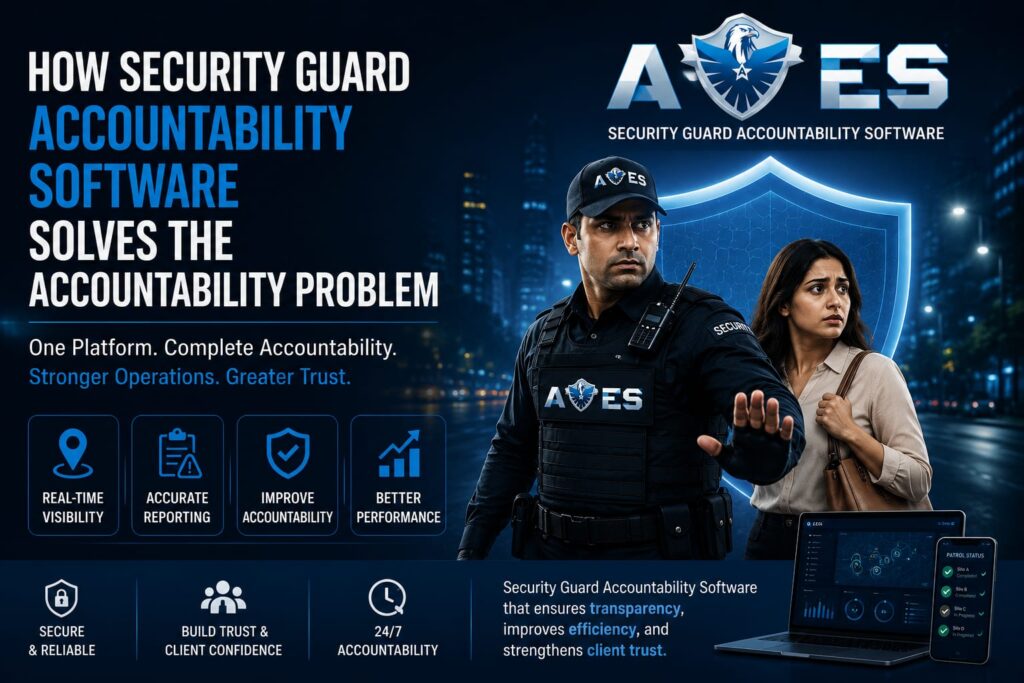
    Guard Tour System showing real-time guard tracking, checkpoint verification, incident reporting, and digital patrol records.

    A lot of firms don’t even think about real-time guard tracking until a lawsuit or an angry client call lands in their inbox. By then the damage to that relationship is done doesn’t matter if the case gets tossed out later.

    The smarter play? Set up patrol verification the way you’d set up insurance. Before you need it not while you’re scrambling to find proof after the fact.

    What to Look For in a Guard Tour System

    Not every guard tour system actually holds up legally no matter what the sales page promises. Here’s what’s worth checking before you commit:

    • Tamper-proof timestamps nobody can quietly edit later
    • Automatic alerts the second a checkpoint’s missed not just a summary at end of shift
    • Reports you can export and hand straight to a lawyer insurer or client
    • Offline scanning since plenty of patrol routes run through dead zones

    Miss any of those and what you’ve got is just a glorified tracking app. Not a real liability shield. Security companies can also follow best practices published by ASIS International for improving patrol management and operational security.

    Where Aves Fits Into This

    This is pretty much the exact gap Aves Security Management was built to close.

    Aves pairs real-time GPS patrol tracking with automatic incident logging and instant alerts so every checkpoint timestamp and deviation gets recorded the second it happens. Backed by data you can actually stand behind if someone pushes back.

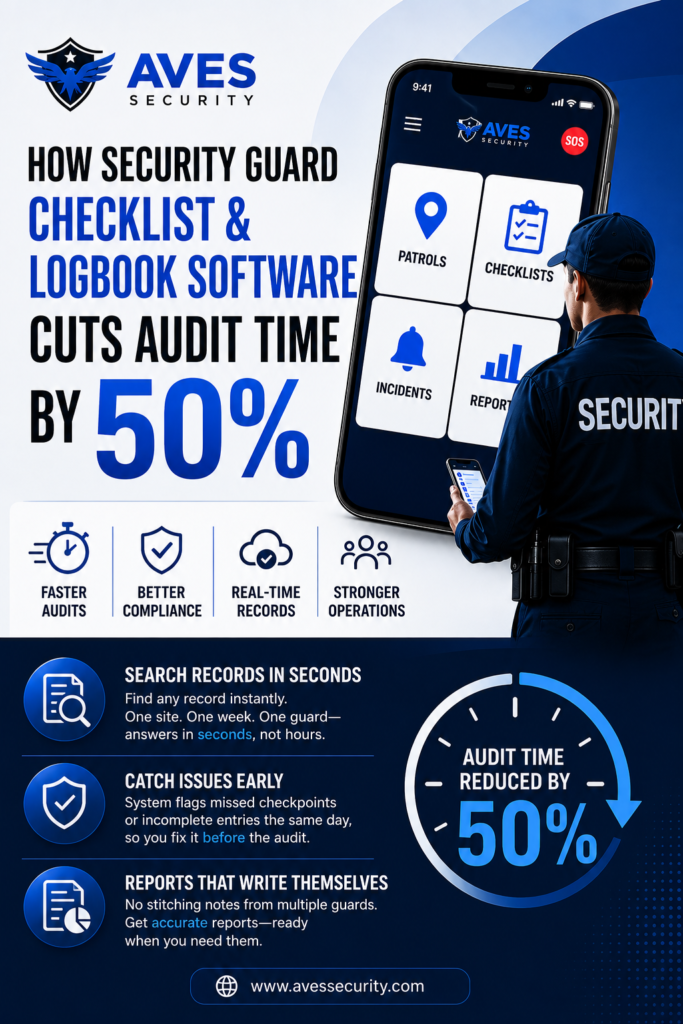
    Want to improve overall guard accountability? Read our guide on Security Guard Checklist & Logbook Software to learn how digital records simplify audits and daily operations

    So if you’re tired of hoping your paperwork holds up when something goes wrong it’s probably worth seeing what a system built for proof not just tracking actually looks like. https://avessecurity.com/

    What is Guard Tour System?

    Guard Tour System helps security companies keep track of their guard patrols. It uses GPS tracking checkpoint verification and digital records. This software makes sure guards are doing their job.

    How does Guard Tour System help prevent guard negligence lawsuits?

    The software keeps a record of where guards are when they check in. This helps security companies prove what happened if there is a problem.

    What features does Aves Guard Tour System offer?

    Aves GPS Patrol Tracking Software has features These include:
    * Real-time GPS tracking
    * Checkpoint verification
    * Incident reporting
    * Instant alerts
    * Digital patrol records

    Who should use Guard Tour System?

    Security companies ,businesses, hospitals, warehouses and residential communities can use Guard Tour System.

    Why is Guard Tour System better than paper logbooks?

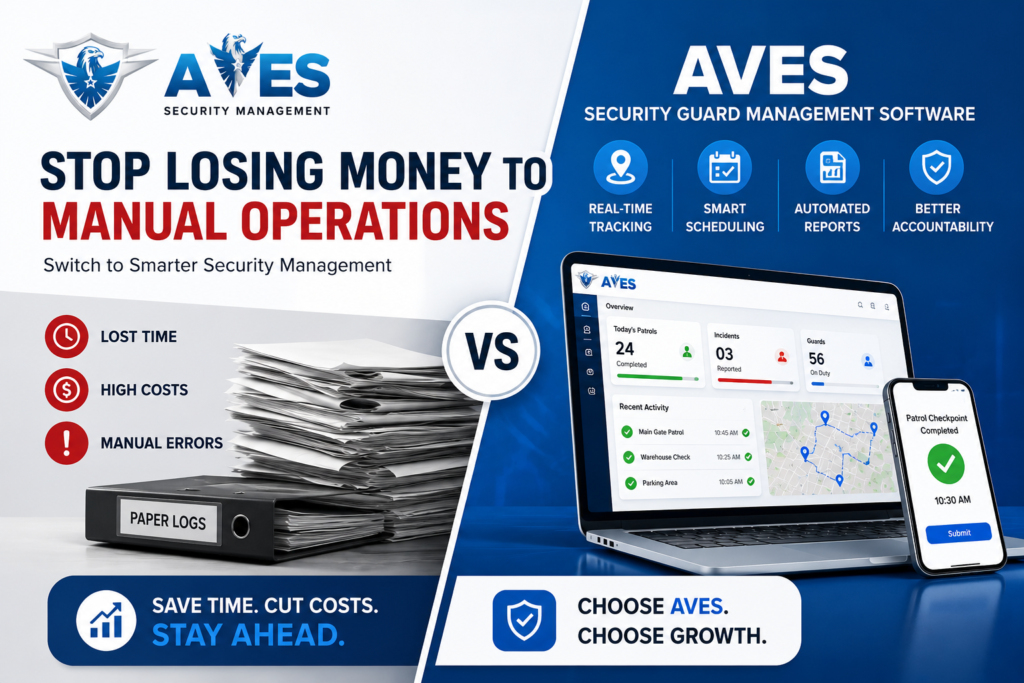
    GPS Patrol Tracking Software vs paper logbooks with real-time patrol verification and tamper-proof digital records.

    Guard Tour System keeps records that can’t be changed. This makes it more accurate than paper logs.

    Why choose Aves Guard Tour System?

    Aves Guard Tour System helps security teams see what happening in time. It keeps records and makes sure guards are doing their job. This software helps security teams be more accountable.

  • Ghost Shifts: How Security Guard Scheduling Software Stops Time Theft

    Ghost Shifts: How Security Guard Scheduling Software Stops Time Theft

    Security guard scheduling software assigns shifts, tracks attendance and verifies that the officer who was rostered is the officer who actually worked — closing the gap that lets “ghost shifts” be billed for work nobody did.

    A warehouse client outside Columbus called their security provider at 11pm asking why the cameras showed nobody on the loading dock for two hours straight. The schedule said a guard was there. The guard swore he was too. Nobody could actually prove either version.

    That’s not a rare story. For a lot of security company owners, it’s just Tuesday.

    This isn’t a piece about why security matters. You know that already. What’s worth digging into is everything running behind the guards, the scheduling, the tracking, the paperwork nobody thinks about until it becomes the reason a contract gets renewed or lost. That’s exactly the gap a proper security guard management system is meant to close.

    Good Guards Were Only Ever Half the Job

    Here’s the part nobody in this industry likes saying out loud. A great guard doesn’t fix a broken operation around him.

    You could hire the sharpest, most trustworthy people in the field and still need a way to prove what happened, when it happened and that it happened the way you’re telling the client it did. Trust doesn’t hold up in a dispute. Records do.

    That’s the real shift that’s happened over the last several years. Clients used to be satisfied with a body standing near a gate. Now they want proof the perimeter actually got walked, not just scheduled to be walked. They want an incident report built off something concrete, not a story pieced together from memory two days later.

    Honestly that’s usually the line between security companies that keep growing and the ones stuck permanently putting out fires. It’s rarely about the guards themselves. It’s whether there’s a real security guard management system holding everything together behind them or in a lot of cases, whether there’s nothing there at all.

    What Paper Actually Costs You

    Nobody sits down on day one and decides to run their company off spreadsheets and a printed logbook. It creeps in slowly. A group chat becomes the unofficial incident reporting system because it’s faster than a form.

    A logbook becomes the patrol record because that’s what the guy before you used and nobody’s gotten around to changing it.

    Small shortcuts. They pile up in ways you don’t notice right away.

    Two guards get double booked at the same site while another sits completely empty and nobody catches it until a client’s already annoyed and asking pointed questions.

    Patrol verification turns into a shrug half the time, because a signature on a clipboard can’t tell you whether someone actually walked the full perimeter at 2am or signed in at the start of the shift and disappeared into their car for six hours. Incident reports lose their weight fast too.

    Something written from memory two days after the fact, no timestamp, no photo attached, tends to fall apart the second an insurer or a lawyer starts asking specific questions.

    Compliance is its own separate mess. An audit request lands and suddenly someone’s burning a full day tearing through filing cabinets trying to rebuild records that should’ve taken five minutes to pull up in the first place.

    Without a Security Guard Management System, missed patrols, scheduling errors and delayed incident reports become much harder to detect, manage and resolve.

    None of this is really a knock on your team, to be clear. It just means the tools they’ve been handed were never built for the kind of accountability clients expect as a baseline now, not an upgrade.

    Every security company eventually reaches a point where manual processes begin to slow the business down. Investing in a Security Guard Management System is often the step that allows operations to become more organised, more transparent and much easier to manage as the company continues to grow.

    What Most Software Reviews Leave Out

    Most content on this topic is basically a features list wearing a trench coat, calling itself advice. Software “streamlines operations,” sure, that’s the line every vendor uses. But what does that actually mean at 9pm on a Friday when three guards call in sick on the same shift?

    A few things worth saying plainly here, since most reviews skip this part entirely.

    Plenty of platforms out there clearly weren’t built by anyone who’s spent a night standing outside in the rain doing this job. If a guard can’t check in with three taps on a phone that’s already sitting at 12 percent battery, that tool gets quietly abandoned within a week, no matter how sharp the sales demo looked in a conference room.

    Adoption is the real fight here, not features. A platform can be stacked with capability and still fail completely if the people using it every single night find it slow, glitchy or confusing. What actually sticks around long term is what’s simple to use under pressure.

    And a dashboard full of charts isn’t the same thing as useful information. It looks great during a pitch. Whether anyone actually knows what to do with those numbers afterward is a completely different question and one most sales demos never answer.

    Many security companies also rely on industry best practices to improve their operations and maintain high service standards. ASIS International publishes guidance, research and professional resources that help security providers strengthen their security operations and adopt modern management practices.

    That’s roughly the gap AVES was built to sit in.

    A good Security Guard Management System shouldn’t feel like another piece of software that people are forced to use. It should quietly become part of the daily routine, helping guards, supervisors and managers stay connected without adding unnecessary complexity to their work.

    What a Security Guard Management System Like AVES Actually Does, Day to Day

    The idea behind AVES, as a security guard management system, is fairly straightforward once you strip away the marketing language.

    Scheduling, patrol tracking, incident reporting and compliance all sitting in one place, updating live, instead of being scattered across a filing cabinet, a spreadsheet and three different group chats nobody fully trusts.

    Scheduling gets centralized, so double bookings and empty shifts show up right away instead of surfacing after a client’s already called to ask what happened.

    A Security Guard Management System gives supervisors complete visibility into guard activities, attendance, patrol completion and site performance from a single dashboard.

    Guards check in and out using location verified attendance, which quietly kills the whole “trust me, I was there” problem for good. You can actually see, in real time, whether someone was physically where they were supposed to be, not just whether they said they were.

    Patrols get logged with timestamps instead of guesswork. There’s a record of exactly when and where each checkpoint got hit and if a patrol gets missed, it shows up that same night rather than three days later during a complaint call.

    Incident reports can carry photos or video attached directly, timestamped automatically the moment they’re captured. That turns a vague paragraph written from memory into something that actually holds up when someone pushes back on it.

    Compliance documentation stays organized as things happen in real time, so when an audit request lands, the records are already there and ready to export instead of triggering a scavenger hunt through old filing cabinets.

    New guards can be assigned training directly through the platform as well, with progress tracked automatically behind the scenes, which cuts down significantly on the odds of someone undertrained ending up on a site they’re not actually ready for.

    Beyond saving time, a Security Guard Management System helps ensure consistency across all sites. Whether a company manages one location or fifty, supervisors know the same processes are being followed and clients receive the same level of service every day.

    Where First-Time Buyers of a Security Guard Management System Usually Trip Up

    A few patterns keep showing up with owners looking at a security guard management system for the first time, worth flagging before you commit to anything.

    There’s a common assumption that only bigger teams really need this kind of system. In practice it’s often the smaller operations that feel the pain fastest, since there’s almost no room to quietly absorb a missed patrol or a lost report when the entire team is five people deep.

    People also tend to underestimate how long it actually takes to settle in. Expect a real adjustment period, somewhere around two to three weeks, not some instant overnight switch. Teams that plan for that timeline tend to have a noticeably smoother experience than teams walking in expecting perfection on day one.

    Another common miss is nobody actually checks what the guard-facing app looks like before buying in. It’s easy to get impressed sitting in front of a clean admin dashboard and completely forget to ask what a guard sees standing outside on their phone at 3am in the rain. If they won’t use it comfortably in that moment, none of the rest of it really matters.

    And people tend to forget to think about scale until it’s already a problem. What works fine for one site type today should still hold up if the business expands into logistics or healthcare later on. Switching systems down the road is a much bigger headache than choosing carefully the first time around.

    Another thing that’s often overlooked is long-term flexibility. Choosing the right Security Guard Management System today means you’re less likely to face the cost and disruption of changing platforms as your business grows and client expectations continue to evolve.

    So Is a Security Guard Management System Actually Worth It

    This is the real question sitting underneath everything else and it deserves a straight answer instead of another pitch.

    The value of a security guard management system isn’t really about convenience, even though that’s usually how it gets marketed. It’s about risk reduction and rebuilding trust with clients who have probably already been burned once or twice by reporting they couldn’t fully rely on.

    Every missed patrol, every late report, every scheduling gap is a small piece of liability just sitting there quietly, waiting. Clients rarely walk away from a provider because the guards were bad people. They walk away because the operation around those guards started to feel unreliable over time.

    A realistic expectation looks something like this. Nothing dramatic happens in week one and that’s fine. What tends to show up over the following months is fewer disputes, faster resolution on incidents when they do happen, cleaner audits and noticeably less weight on whoever’s running the office day to day. That’s not a huge promise. It’s just what a steadier operation actually looks like from the inside.

    In many ways, the biggest advantage of a Security Guard Management System isn’t the technology itself. It’s the peace of mind that comes from knowing every patrol, attendance record and incident report is available whenever a client, auditor or manager needs it.

    Rolling It Out Without Burning People Out

    Companies that handle this transition well tend to follow a similar path more or less. They start with one piece first, usually scheduling and attendance, before layering in incident reporting and compliance tracking a few weeks later.

    They bring a handful of experienced guards in early to test things out before rolling it out company wide. And they treat the first month honestly, as a learning period, rather than expecting it to run flawlessly by day three.

    Rolling out a Security Guard Management System in phases helps security teams adapt quickly while reducing resistance to change.

    That slower approach avoids the most common failure point, which is trying to flip everything at once and burning out a team that’s already stretched thin to begin with.

    Where That Leaves You

    If you’ve made it this far, the real problem was probably never about finding better guards in the first place. It was about finally having a security guard management system that can actually prove the work your team is already doing every night.

    Choosing the right Security Guard Management System is an investment in better operations, stronger client trust and long-term business growth.

    That’s the quiet relief most owners in this industry are chasing, whether they’d say it out loud or not. Not another platform promising to revolutionize the whole business overnight, just a security guard management system that works the way the job already needs it to.

    If that sounds close to the gap you’ve been dealing with, taking a closer look at AVES Security Management is a reasonable next step. Not a leap of faith.

    Every security company eventually reaches a point where manual processes begin to slow the business down. Investing in a Security Guard Management System is often the step that allows operations to become more organised, more transparent and much easier to manage as the company continues to grow.

    What is a security guard management system, really?

    The digital backbone behind your guards. Scheduling, patrol tracking, attendance, incident reports, compliance, all in one place instead of scattered across paper logs and whichever group chat happens to be active that week.

    Why bother with one?

    Paper and spreadsheets hold up fine when you’re small. Then a second or third site gets added and things start slipping. Guards get double-booked. Patrols get missed. Reports stop matching reality. A decent system catches most of that before a client does.

    What does AVES actually do differently day to day?

    Scheduling, GPS attendance, patrol verification, incident reporting and compliance land on one screen instead of five. A supervisor looks, sees what’s happening and steps in if something’s off.

    Is this only for bigger companies?

    Not really. A five-person team feels a missed patrol harder than a fifty-person one does, since there’s less room to absorb it quietly.

    Does it replace the guards?

    No. Not close. Guards do the actual work. The system just makes sure that work gets recorded properly instead of vanishing into memory.

    Will it hold up as the business grows?

    That’s kind of the point of it. Built to handle more guards, more sites, more clients, so nobody’s ripping everything out and starting over in two years.

    Where do I actually learn more?

    The AVES website, a demo request or a direct conversation with their team about your specific setup. Any of those beats reading another blog post.

  • Security Guard Management System: Smarter Patrol Tracking & Scheduling

    Security Guard Management System: Smarter Patrol Tracking & Scheduling

    The AVES Security Guard Management System is a cloud-based platform that runs a security operation end to end: patrol tracking and checkpoint scanning, real-time incident reporting, visitor and gate pass records, shift scheduling, checklists and audit-ready compliance reports — across one site or many, from a single dashboard.

    Somewhere out there right now, a supervisor is refreshing a WhatsApp chat, hoping a guard replies “all clear” before the client calls asking why they haven’t heard anything in an hour.

    Maybe it’s you. If it is, you already know the feeling that mix of “probably fine” and “but what if it’s not.”

    That gap between “probably fine” and “actually verified” is basically the whole reason a security guard management system exists.

    Not a fancy concept, just a practical fix for a problem every security company eventually runs into you can hire great guards, write solid contracts, and still lose a client because you couldn’t prove, in the moment, that the coverage you promised was actually happening.

    More firms are figuring this out and switching over small teams with a handful of guards, and bigger operators juggling dozens of sites across a city.

    They’re moving off spreadsheets and group chats and onto real security guard management software. Aves Security is one of the platforms built specifically to handle this, ground up, rather than bolted together from unrelated tools.

    A Security Guard Management System gives supervisors complete visibility into guard activities, schedules, patrols, and incident reports from one platform. This helps security teams improve efficiency while delivering better service to clients.

    So what does that actually look like once it’s running?

    How a Security Guard Management System Replaces Outdated Security Habits

    Nobody sits down on day one and designs a messy system on purpose. It builds up. Scheduling starts in a spreadsheet because, well, it’s free and everyone knows Excel.

    Incident updates move to WhatsApp because it’s already on every guard’s phone and nobody wants to install another app.

    Paper checklists survive because one client asked for them years back and it never seemed worth changing.

    Each piece makes sense in isolation. Put them together and you get a system where nothing actually connects to anything else. A missed shift stays invisible until a client’s already upset about it.

    An incident that took ninety seconds to happen takes two days to turn into a report anyone can read. And when someone finally asks to see current licensing paperwork, you’re not sure it’s even current.

    Aves starts from a simpler premise: scheduling, patrol tracking, incident reports, and compliance tracking should all live in the same place. Not spread across five tools that were never meant to talk to each other.

    Security Guard Management System: Replacing “Probably” With Proof

    Ask any ops manager what actually keeps them up at night, and you’ll hear some version of the same worry: Did the guard really walk the route, or park somewhere quiet for an hour? Most guards are doing exactly what they’re supposed to. But “most” isn’t a great answer when a client wants proof.

    That’s the gap guard tracking software closes. GPS check-ins combined with NFC or QR scans at each checkpoint give you a timestamped, verifiable trail of where a guard actually was. Not a guess, not a guard’s word against a client’s suspicion an actual record you can pull up.

    It works in both directions, which people tend to forget. It protects guards too. If something happens on a shift and questions come up later, there’s a clean record proving the protocol was followed.

    And it protects the business side, because when a renewal conversation gets tense, you’re not arguing you’re showing.

    Using a Security Guard Management System also helps security companies improve client trust by providing real-time proof of completed patrols, guard attendance, and security operations.

    Security Guard Management System for Effective Patrol Routes

    Knowing where a guard was is one thing. Knowing whether the route itself makes sense, and whether it’s being followed the same way shift after shift, is a different problem entirely and it’s the one a security patrol management system is really built for.

    Supervisors using Aves can lay out checkpoint routes per site, set expected time windows between scans, and get flagged automatically if anything looks wrong: a checkpoint that got skipped, a scan that happened too fast to be real, a guard who’s overdue.

    The alert comes during the shift, while there’s still time to do something about it, instead of showing up in a report three weeks later when it’s already history.

    A reliable Security Guard Management System helps supervisors identify missed checkpoints, improve patrol efficiency, and respond to issues before they affect client security.

    There’s a quieter benefit too. After a few months of this, you start to see patterns which sites run smoothly, which ones keep having near misses.

    That’s genuinely useful information, whether you’re deciding how to staff a location or explaining to a client why their contract is priced the way it is.

    Keeping It Simple Enough for 2am

    None of this matters if the tool is annoying to use. A guard standing in an empty parking lot at two in the morning isn’t going to bother with something clunky, and honestly, why would they.

    The security guard mobile app side of Aves is kept deliberately basic. Clock in, scan a checkpoint, log an incident, send a message to a supervisor — all from a phone the guard already has on them. No separate scanner to hand out and eventually misplace. No half-day training session before anyone can use it.

    There’s a simple truth here: a tool nobody uses is worse than having no tool at all, because it creates the illusion that things are being tracked when they aren’t.

    Every modern Security Guard Management System should be simple enough for guards to use while giving supervisors complete visibility into daily security operations.

    Getting the Report Right the First Time

    Something’s going to go wrong on a shift eventually that’s just the nature of the job. What usually goes wrong after the fact is the paperwork.

    A Security Guard Management System ensures every incident is recorded accurately, enabling supervisors to respond quickly and maintain complete documentation for clients and compliance.

    A guard tries to remember details three hours later and leaves out the one thing that actually mattered.

    Incident reporting software for security teams fixes the timing problem. Guards can log an incident on the spot, with photos and an automatic timestamp, while everything’s still fresh.

    Supervisors find out right away, rather than hearing a secondhand account at shift change. And clients get a real report instead of a phone call that starts with “So, something happened tonight.

    This isn’t just about appearing organised, either. It’s insurance documentation. It’s legal cover if things escalate. It’s being able to state, with confidence, exactly what happened and when because it was recorded as it occurred, not pieced back together from memory two days later.

    Compliance That Doesn’t Depend on Someone Remembering

    Licenses expire. Certifications lapse. Certain sites carry their own specific training requirements that are easy to lose track of until an audit’s already on the calendar. Every security firm deals with this in some form, and it’s exactly the kind of detail that slips through quietly.

    A Security Guard Management System also helps organisations track licenses, certifications, and compliance records, ensuring security teams remain audit-ready at all times.

    Organisations can also follow security and workplace safety best practices published by the Occupational Safety and Health Administration (OSHA). https://www.osha.gov

    Compliance monitoring software built into Aves takes that off any one person’s plate. Licenses close to expiring trigger alerts well ahead of time.

    Certifications are tracked per guard, per site. And when an audit actually happens, the documentation is already sitting there, organised, not spread across three different inboxes and a shared drive nobody’s touched since last year.

    Nobody gets excited demoing this feature. It’s not flashy. But it’s the one that saves you on the day a surprise inspection shows up unannounced.

    Why Firms Actually Make the Move

    None of these individual pieces, tracking, patrol routes, a mobile app, incident logs, or compliance alerts is new by itself. What changes the picture is having all of them live in one place, instead of five separate tools stitched together out of habit.

    A security guard management system doesn’t take the manager’s job away. It just gives them the visibility to actually do it, instead of spending half the day hunting down information that should’ve been sitting right there already.

    If spreadsheets and group chats are still working for you, fair enough, plenty of things work fine right up until the one night they don’t. The real question is whether you’d rather find that out the hard way or switch before it happens.

    Choosing the right Security Guard Management System helps businesses improve security operations, strengthen compliance, enhance guard accountability, and build long-term client trust.

    Aves Security is built for companies that would rather spend their time growing the business than holding the paperwork together.

    https://avessecurity.com

    Frequently Asked Questions (FAQs)

    1. What is a Security Guard Management System?
    It’s basically one platform to handle guard scheduling, patrols, incident reports, attendance, and client reporting instead of spreadsheets and paper logs scattered everywhere.

    2. How does guard tracking software work?
    Guards check in at points using GPS, QR codes, or NFC. Those check-ins get logged instantly, so supervisors know what’s actually happening on-site, not just what’s supposed to happen.

    3. Why does patrol management matter?
    Because missed checkpoints happen and without tracking, nobody finds out until something goes wrong. Good patrol management catches it right away.

    4. Can guards use Aves Security on their phones?
    Yes. Clock in, do patrols, report incidents, message supervisors all from the app, no extra hardware needed.

    5. How does Aves Security help with compliance?
    It tracks licenses, certifications, and training deadlines in the background, so you’re not scrambling to pull records together before an audit.

    6. Who’s it for?
    Security agencies, facility managers, corporate campuses, hospitals, schools, industrial sites basically anyone managing guards across more than one location.

    Frequently Asked Questions

    Does AVES support multi-site management?

    Yes. AVES provides centralised command and control, so supervisors can monitor security operations across multiple sites and locations from a single dashboard rather than logging into each site separately.

    Does AVES include mobile patrol tracking and checkpoint scanning?

    Yes. Officers record patrols from the AVES mobile app, and checkpoint verification produces a timestamped record confirming each round was actually completed.

    Does AVES offer real-time incident reporting?

    Yes. Officers submit incident reports in real time from their mobile device, and can attach photos and video as evidence. Supervisors are notified immediately rather than at the end of a shift.

    Does AVES include visitor management and gate passes?

    Yes. AVES handles visitor registration, gate pass and permit creation, approval or rejection of pass requests, and a searchable record of everyone who entered the site.

    Does AVES support shift scheduling?

    Yes. AVES lets you assign and modify shift schedules, enable shift swapping, and track attendance.

    Is AVES cloud-based?

    Yes. AVES is a cloud-based platform accessible from both mobile and desktop, with 24/7 availability.

    Does AVES work offline?

    AVES offers limited offline capability. Core field actions can be captured without connectivity and synchronise once the connection is restored. Full functionality requires an internet connection.

    Does AVES provide compliance reporting and audit trails?

    Yes. Every action is timestamped and digitally recorded, and AVES generates audit-ready PDF reports so historical records can be retrieved quickly during an audit or investigation.

    Does AVES offer a free trial or a demo?

    Yes. AVES offers both a free trial and a personalised demo. You can request either from avessecurity.com.

    Is AVES suitable for small and mid-sized security companies?

    Yes. AVES is designed to scale, and is used by organisations from small single-site teams through to multi-site enterprise operations.

    Does AVES include performance analytics?

    Yes. AVES provides dashboards, detailed analytics and performance reports covering guard activity, incidents and compliance.

    Which industries use AVES?

    AVES is used across residential communities, corporate offices, manufacturing, hospitality, healthcare, education, government, warehousing, industrial parks and event venues.

  • What Is a Security Management System and Why Does Your Business Need One?

    What Is a Security Management System and Why Does Your Business Need One?

    A security management system is software that brings an organisation’s daily security work — patrols, incident reports, visitor records, checklists, shifts and audit documentation — into one centralised platform, replacing paper registers and log books.

    Every organization leans on its security team to protect people, assets and reputation. The trouble is that as a business grows, running security out of a paper register stops scaling. What worked with one site and six officers falls apart at five sites and sixty.

    A security management system is simply a structured, digital way to run those daily security activities — one place for the work, the records and the oversight.

    What Does a Security Management System Do?

    In practice, it takes the jobs currently spread across a dozen books and folders and puts them in one platform:

    • Daily security reports
    • Incident reporting
    • Visitor management
    • Patrol monitoring
    • Security checklists
    • Gate pass records
    • Lost and found reports
    • Property records
    • Training records
    • Audit documentation

    Same work. One system. Records you can actually find again.

    Why Businesses Adopt One

    The benefits show up quickly, and they compound.

    You can finally see what is happening

    One dashboard covering one site or twenty, without phoning around for updates.

    Accountability stops being a debate

    Every action carries a name and a timestamp, so supervisors can see what was completed and what quietly was not.

    Information moves at the speed of the incident

    Reports reach the right people immediately, which means responses start sooner.

    Audits get boring, in a good way

    Digital records are searchable and already in order, so compliance stops being a scramble.

    Officers spend less time on paperwork

    Less time writing things up, more time on the floor doing the job.

    Who Should Use One?

    Any organization with a dedicated security team, across every industry:

    • Residential communities
    • Manufacturing facilities
    • Hotels
    • Hospitals
    • Educational institutions
    • Warehouses
    • Corporate offices
    • Shopping malls
    • Industrial parks

    Where Security Operations Are Heading

    Security management has moved well beyond manual documentation. The organizations that go digital get sharper visibility, cleaner reporting and accountability they can actually stand behind in an audit.

    AVES Security Management System replaces the paper-based routine with a centralised, cloud-based platform — so your team spends less time recording the work and more time doing it.

    For the guard-specific version of this — patrol tracking, scheduling and officer management — see our guide to the AVES Security Guard Management System.

  • How Incident Reporting Software Improves Workplace Security

    How Incident Reporting Software Improves Workplace Security

    Incident reporting software lets security officers record an incident digitally from a mobile device at the moment it happens, in a standard format, and stores every report in a searchable, timestamped record. It replaces the handwritten incident book.

    Every security incident tells you something. Whether it is unauthorised access, damaged property or a near miss on the shop floor, the quality of the report decides how well the organization can respond — and whether it can prove what happened later.

    Handwritten reports rarely hold up. They arrive late, miss details, and have a habit of disappearing when you need them most. That is the gap incident reporting software is built to close.

    Why Incident Reporting Matters

    Done properly, incident reporting helps an organization:

    • Spot risks that keep recurring
    • Improve security procedures over time
    • Support investigations with solid evidence
    • Meet compliance requirements
    • Protect employees and visitors

    Done badly, it just creates paperwork nobody trusts.

    Where Manual Reporting Breaks Down

    The usual failure points are familiar to anyone who has run a security team:

    • Missing information
    • Reports submitted hours after the event
    • Paperwork that gets lost
    • Handwriting nobody can decipher
    • No central place to store any of it

    Individually these look minor. Together they quietly undermine the whole operation.

    What Incident Reporting Software Changes

    The core shift is simple: officers report from the device already in their pocket, the moment the incident happens, using a form that will not let them skip the important fields.

    From there you get:

    • Faster reporting, straight from the scene
    • A standard format for every report
    • Real-time notifications to supervisors
    • Photo and video evidence attached to the record
    • Centralised, searchable documentation
    • A complete audit trail behind every entry

    Better Information, Better Decisions

    When management sees an incident as it is logged rather than at the end of a shift, corrective action starts sooner. And once you have months of structured reports behind you, patterns start to surface — the same door, the same hour, the same weak point — which is where prevention actually begins.

    Why Choose AVES

    AVES Security Management System gives teams structured digital incident reports, complete audit trails, and a single dashboard to monitor operations across every industry and every site.

    Good incident reporting software saves time. More importantly, it means that when someone asks what happened, you can answer with evidence rather than recollection.

    Incident reporting is one part of a bigger picture. See how it fits into a full security guard management system, alongside patrols, scheduling and compliance.

    Frequently Asked Questions

    What is incident reporting software?

    Incident reporting software lets security officers record incidents digitally, in a standard format, from a mobile device at the moment they happen, and stores every report in a searchable, timestamped record.

    Does AVES offer real-time incident reporting?

    Yes. Officers file reports in real time from the AVES mobile app and supervisors are notified immediately, so corrective action can begin before the shift ends.

    Can guards attach photos or video to an incident report?

    Yes. AVES incident reports support photo and video attachments, so evidence is captured with the report rather than described from memory afterwards.

    Does incident reporting software help with compliance audits?

    Yes. Because every entry is timestamped and stored centrally, historical incident logs can be filtered and exported as audit-ready PDF reports in seconds instead of being retrieved from paper files.

    Does AVES offer a free trial or a demo?

    Yes. AVES offers both a free trial and a personalised demo.

  • 10 Signs You Need a Guard Management System

    10 Signs You Need a Guard Management System

    Security teams carry a lot of responsibility — people, property, and the day-to-day running of the business. Yet plenty of them are still doing it with paper registers, spreadsheets and manual reporting that slow everything down.

    If any of the following sound familiar, it is probably time to look at a guard management system.

    1. Incident reports land hours after the event

    By the time a handwritten report reaches a supervisor, the window to act has usually closed. Digital reporting lets an officer log the incident from their phone the moment it happens.

    2. Your registers are a filing problem

    Searching stacks of files during an audit or investigation burns hours you do not have. Digital records surface in seconds.

    3. Supervisors are still ringing around for updates

    Without a central system, supervisors fall back on phone calls and messaging apps just to find out what is going on.

    4. Nobody can prove a patrol actually happened

    If patrols are logged by hand, there is no reliable way to confirm a round was completed or spot the ones that were missed.

    5. Information is scattered across separate books

    Visitor logs here, incident reports there, key registers somewhere else. Pulling a simple report becomes a scavenger hunt.

    6. Audits take far longer than they should

    Preparing documentation is painless when the records are already digital, timestamped and searchable.

    7. You cannot see across multiple sites

    Once you are running more than one location, you need a single dashboard. Anything else is guesswork.

    8. Small mistakes keep slipping through

    Missing fields, wrong dates, handwriting nobody can read. Each one quietly weakens the record.

    9. Every officer writes reports differently

    Digital forms force a consistent structure, so every report contains what it should.

    10. Management is always looking at yesterday

    Decision-makers need live operational data, not a summary that arrives at the end of the shift.

    What a Guard Management System Actually Changes

    None of these problems are dramatic on their own. Together, they add up to a security operation that cannot answer basic questions quickly: what happened, when, who was there, and what was done about it.

    A digital platform fixes that by making accountability and reporting a by-product of the work rather than extra admin on top of it. Every activity is captured, timestamped and stored where it can be found again.

    AVES Security Management System brings incidents, inspections, patrols, visitor records and daily operations into one platform, across every industry — so supervisors stop chasing information and start acting on it.

    Modern security takes more than presence on site. It takes accurate information, in the right hands, at the right time.

    If several of these sound familiar, our complete guide to the AVES Security Guard Management System walks through exactly how each of these gaps gets closed.

  • Why Paper-Based Security Operations Fail (And How Security Guard Management Software Fixes It)

    Why Paper-Based Security Operations Fail (And How Security Guard Management Software Fixes It)

    Security guard management software is a digital platform that replaces paper registers, incident books and patrol logs. Officers record activity from a mobile device, and supervisors monitor every site from a single dashboard in real time.

    Security has changed a lot in the past decade. Threats are smarter, expectations are higher — and yet a surprising number of organizations still run their day-to-day operations on paper registers, handwritten reports and phone calls.

    It works, until it doesn’t. Paper slows everything down, invites mistakes, and makes it almost impossible to prove what actually happened.

    A modern workplace needs modern tooling. That is the case for security guard management software.

    The Problem with Paper-Based Security Operations

    Walk into most security offices and you will still find some version of this stack:

    • Visitor registers
    • Incident books
    • Patrol log books
    • Lost and found registers
    • Key issue registers
    • Paper checklists
    • Manual approvals

    None of this is unreasonable. These methods have worked for decades. But they carry costs that are easy to overlook until something goes wrong.

    Information arrives too late

    When an incident happens, the supervisor often does not hear about it until the paperwork physically lands on their desk. By then, the moment to act has usually passed.

    Old reports are hard to find

    Need a report from three months ago? That means a filing cabinet and a lost afternoon — usually right when an auditor is waiting.

    There is no live picture

    Managers cannot see what is happening across sites without ringing around. Phone calls, messaging apps and end-of-shift summaries do not add up to real-time visibility.

    Small errors cause big problems

    Handwritten reports miss details, skip signatures, or simply cannot be read. Every one of those gaps weakens an investigation later.

    Why Security Teams Are Going Digital

    Digital transformation stopped being a finance-and-HR story a while ago. Security operations are moving to cloud platforms for the same reasons every other function did: visibility, accountability, and less time lost to admin.

    Instead of a shelf of registers, everything lives in one place. Officers record activity from their phones as it happens, and supervisors watch it land on a dashboard in real time.

    How AVES Helps

    AVES Security Management System is cloud-based security guard management software built to digitise the daily grind of security operations.

    It is not about replacing your officers. It is about giving them fewer forms to fill in, and more time to do the job they were hired for.

    With AVES, teams can:

    • Record daily security activity digitally
    • Submit incident reports in real time
    • Manage inspections and checklists
    • Track patrol activity
    • Log visitor and gate pass records
    • Keep audit-ready digital records
    • Monitor multiple sites from one dashboard

    The payoff is straightforward: faster communication, cleaner records, and far better control over what is actually happening on the ground.

    Who Benefits Most?

    Any organization running a dedicated security team, across every industry:

    • Residential communities
    • Commercial buildings
    • Manufacturing facilities
    • Hotels
    • Educational institutions
    • Warehouses
    • Corporate offices
    • Industrial parks
    • Event venues

    The industry changes. The need for structured, searchable records does not.

    Compliance and Audits Get Easier

    Audit readiness is the benefit people underestimate until their first audit. Instead of digging through boxes, an authorised user pulls up historical reports, inspection records and incident logs in seconds. Compliance stops being a fire drill.

    Accountability You Can Actually Prove

    Every action in the system is logged with a name and a timestamp attached. Supervisors can see what got done, what did not, and where standards are slipping — without having to take anyone’s word for it.

    Final Thoughts

    Security is no longer just about standing at a gate. Organizations expect their security teams to deliver accurate reporting, quick communication and a clear operational picture. Paper cannot keep up with that, and the gap is widening.

    Every other department has already been through this transition. Security is next. Swap the manual registers for a centralised platform and you get better reporting accuracy, stronger accountability, and decisions based on what is actually happening rather than what someone remembered to write down.

    If your team is still running on paper, it is worth a look.

    For a full breakdown of how a security guard management system works in practice — patrol tracking, scheduling, reporting and compliance in one place — read our complete guide.