Tag: Security Guard Management System

  • Security Guard Audit Checklist: What Site Inspectors Actually Check

    Security Guard Audit Checklist: What Site Inspectors Actually Check

    By Nithish, AVES Security

    A security audit checklist is what separates a clean inspection from an awkward one. I’ve sat across the table during audits that went fine and audits that went badly and the difference was almost never the guards. It was the paperwork. An inspector asks for last month’s patrol records and someone digs out a stack of registers a few gaps here, a guessed time there, one page where the ink’s gone faint enough you can’t read it. Nobody’s accusing anyone of skipping rounds. The client just wanted proof and there wasn’t any sitting ready.

    That’s really what a security audit checklist is for. Not “did the guard do the job,” that part’s usually fine, but “can you show someone who wasn’t there that it happened.”
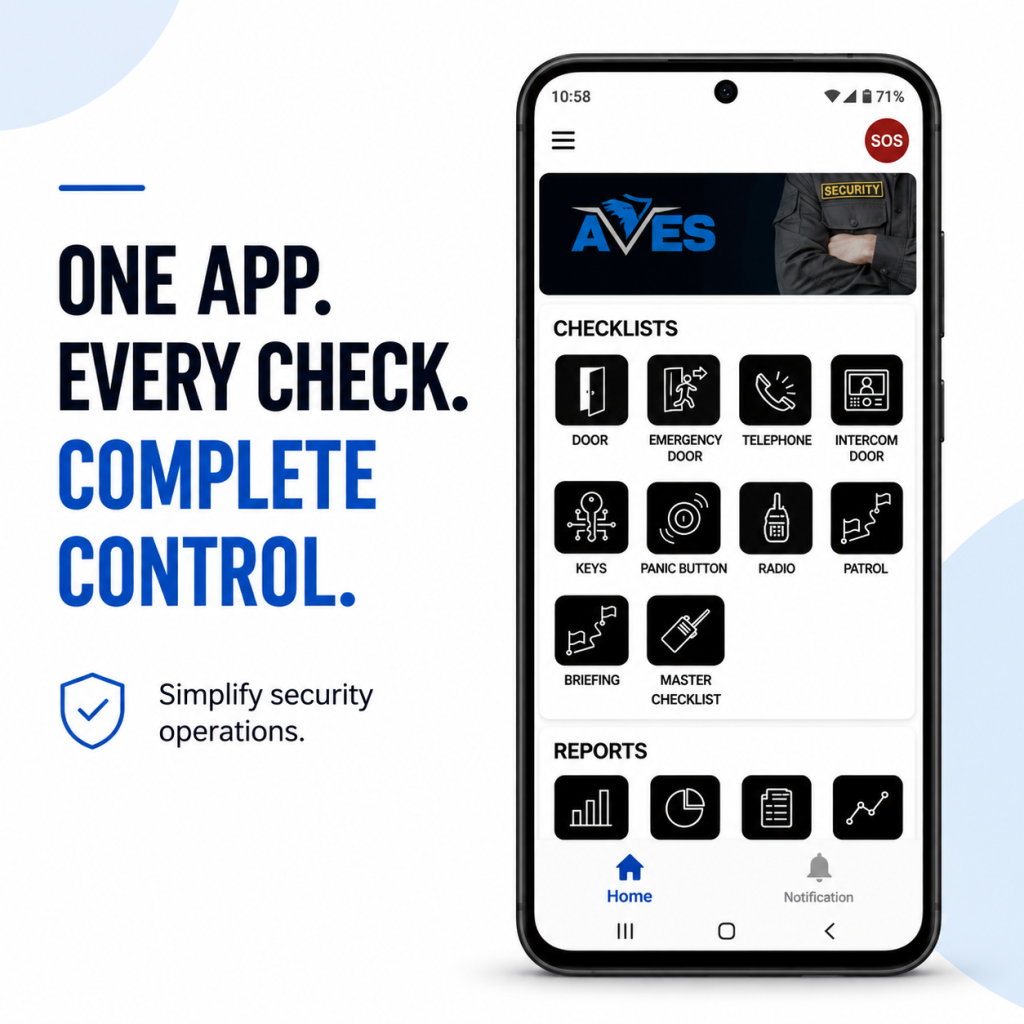
    What is a security audit checklist actually for

    A security audit checklist like this ends up in front of three kinds of people and they’re not all looking for the same thing.

    A client’s compliance officer is checking the contract got delivered right number of patrols, right intervals, incidents logged and closed. A regulator wants to see statutory requirements actually followed, not just claimed on paper. And your own supervisor doing a spot-check is trying to catch a site that’s slipping before the client notices it first.

    Different people, same underlying test though: does this record match something that actually happened and when.

    What a security audit checklist actually covers

    Every site has its own quirks, but pull those aside and most audits client, regulatory, internal, doesn’t matter end up checking the same seven things.

    Attendance and shift coverage. Was someone actually on site every hour they were supposed to be, no unexplained gaps between shifts.

    Patrol completion. Were the rounds walked, in the right order, not just marked done at the end of the night.

    Incident handling. Logged when it happened, escalated if it needed escalating, closed with an actual outcome not left open.

    Key and access control. Who had which key, when they took it, when it came back.

    Visitor and contractor movement. Who came in, when and who approved it?

    Equipment and defect reporting. Faults and damage flagged when they’re found ideally before the client spots them first.

    Training records. Can you actually show who was trained on what and when?

    An inspector isn’t expecting a perfect site. They’re expecting a record for each of those seven, produced without anyone scrambling to reconstruct it from memory the night before.

    Where a security audit checklist usually finds gaps

    It’s rarely the first item that trips a site up. It’s usually somewhere in the middle a patrol that got logged but has no timestamp to prove it was on schedule or a visitor with an entry time and no exit time. Any one of those looks minor on its own. Line up a month of them and that’s the gap between a clean audit and a follow-up visit.

    The worst version of this is when two records that should match don’t. A key register showing a guard holding keys during a shift, the attendance log says they weren’t even on site that’s not a gap, that’s a records problem and it’s a lot harder to explain away than a missing entry.

    How a security audit checklist changes on audit day

    None of this means guards do more work. It means the same seven categories get captured once, when they happen, tied to a timestamp and a name instead of written up later from memory. When a client or regulator wants the last quarter, that’s a filtered report instead of someone flipping through binders looking for the right week.

    It’s the same shift that’s already happened with patrol verification, key custody and occurrence logging on individual sites. A security audit checklist stops being a scramble before an inspection and just becomes a byproduct of the daily paperwork being accurate to begin with.

    Regulatory bodies like ASIS International publish general standards for physical security audits and most client contracts in this space borrow the same core structure coverage, incident handling and access control, at minimum.

    Preparing your security audit checklist before an inspection

    Don’t try to backfill history inspectors can usually tell a record written at the time from one written last week to cover a gap. Better to pull those seven categories from your duty roster and gate pass records for the last thirty days and see where the actual holes are that’s usually where a security audit checklist review starts anyway. Most of the time it’s one or two, not all seven. Fix the process from here, be straight about it if asked and treat the audit as the thing that told you where the weak spot actually was.

    The bottom line on your security audit checklist

    A security audit checklist isn’t a form you fill in before someone visits. It’s a check on whether the records you’re already keeping can stand on their own, without you in the room explaining what really happened. The sites that get through audits without drama aren’t the ones with the thickest file they’re the ones where the paperwork was right the first time it was written.


    Frequently asked questions

    What is a security audit checklist? A security audit checklist is a list of the records and controls an inspector checks to confirm a site’s security operations are actually happening as reported attendance, patrols, incidents, keys, visitor movement, equipment condition and training records.

    Who typically requests a security audit checklist? Three groups usually ask for it: a client’s compliance officer verifying contract terms are met, a regulator or licensing body confirming statutory requirements and a company’s own supervisor running an internal spot-check.

    How often should a security audit checklist be reviewed? Most sites review it monthly at minimum, with a fuller pass before any scheduled client or regulatory audit. Waiting until an audit is announced to check your records usually means finding the gaps too late to fix them.

    What’s the difference between a security audit checklist and a daily guard checklist? A daily guard checklist covers what happens during a single shift gear checks, rounds, handover. A security audit checklist looks backward across a period of time to confirm those daily records are complete, consistent and provable.

    Can a security audit checklist be done digitally instead of on paper? Yes. A digital checklist ties each entry to a timestamp and the person who logged it, which is what most inspectors are actually looking for a record they don’t have to take on trust.

    What happens if gaps show up during a security audit? A gap on its own usually isn’t fatal to an audit. What matters more is whether the company can explain it and show the process has since been fixed, rather than trying to backfill records after the fact.

    For more details visit our website: https://avessecurity.com/
  • “Security Guard Checklist: The Foolproof Shift Template”

    “Security Guard Checklist: The Foolproof Shift Template”

    Ask five site supervisors for their “security guard checklist,” and you’ll get five different PDFs, and none of them will match what actually happens on a shift. Some are a single page with ten boxes on it that could apply to literally any job site. Others run four pages long and read like they were drafted by someone in a compliance office who’s never walked a perimeter at 2 a.m. with a flashlight that’s about to die.

    Neither version gets used properly, and honestly, guards can’t be blamed for that. A checklist has to fit into the time a shift actually gives you. Eleven minutes between rounds isn’t eleven minutes to fill out a form.

    So here’s a security guard checklist built the other way around starting from what a shift actually looks like, hour by hour, and working out what needs to be written down at each stage.

    Why Most Security Guard Checklists Don’t Get Filled In Properly

    Talk to enough guards and supervisors and the same complaints keep coming up.

    Length is the obvious one. Nobody’s filling out fifty line items in the fifteen minutes before a shift starts. What happens instead is that the form gets completed after the fact, from memory, sitting in the guard shack, which more or less defeats the point of having it.

    There’s also the problem of everything being lumped together. Gate checks, radio tests, end-of-shift notes, all sitting in one long undifferentiated list. A guard glancing at that mid-shift can’t quickly tell what’s due right now versus what’s for later.

    Then there’s the stuff a plain checklist just can’t capture. Say a door’s been propped open with a brick and you’ve told the site manager about it. Where does that go on a form made entirely of tick boxes? Usually nowhere. It ends up scrawled in the margin, or in a separate notebook that nobody ever cross-references again.

    And the last one is more of a trust issue. If a checklist doesn’t line up with what a supervisor or a client actually looks at during a review, guards catch on fast, and the whole thing starts feeling like busywork.

    None of that gets solved by tacking on more boxes. It gets solved by matching the security guard checklist to how a shift actually unfolds, and by making sure whatever gets written down has somewhere real to go afterward.

    Security Guard Checklist, Broken Down by Stage of the Shift

    Before You’re Even Posted

    The first five or ten minutes on site, ideally before you relieve whoever’s coming off shift.

    • Uniform and ID badge on and correct for the site
    • Radio switched on, charged, tested on the right channel
    • Flashlight charged and actually working (not “worked yesterday”)
    • Duty phone or panic button charged, if the site issues one
    • Keys, cards, or fobs collected and checked against the key log
    • Previous shift’s incident log or occurrence book read through
    • Any handover notes from the outgoing guard read and understood, not just glanced at
    • Standing orders checked in case anything’s changed since last shift
    • PPE checked, if the site calls for it

    If something’s off here dead radio, keys missing from the log that’s the moment to say something. Not two hours in, once you’ve already started rounds without it. This is the part of the security guard checklist that gets rushed most often, and it’s the cheapest one to get right.

    On Rounds

    This is the part guards carry with them, clipboard in hand or phone in pocket. It has to be quick, or it slows the whole patrol down and people start skipping it.

    At each point on the round:

    • Door or gate is in the state it’s supposed to be in
    • Locks and hinges look fine, nothing pried or forced
    • Lighting’s working in the area
    • Fire exits and extinguishers aren’t blocked
    • Anything unusual a car that shouldn’t be there, someone loitering gets a note
    • Checkpoint scanned or logged, whatever method the site uses
    • Time noted

    At access points specifically:

    • Visitor log current, nobody unregistered wandering around
    • ID actually checked for anyone coming in, not waved through
    • Deliveries logged

    The time matters more than people think. A checkmark tells you the check happened; a timestamp tells you when. That gap is exactly what digital patrol tools are built to close automatically. We go into that in guard duty verification if you want the fuller picture. It’s also a piece of a security guard’s checklist that a paper form struggles to prove after the fact.

    In the Control Room

    For anyone posted there or rotating through:

    • Camera feeds all up and recording
    • No dead cameras that haven’t been flagged
    • Playback tested, works when you need it to
    • Alarm panel showing the correct armed/disarmed status
    • Access control system logging properly
    • Storage isn’t about to run out
    • Any system alerts actually looked at, not dismissed

    Even sites without a real control room usually have someone holding this responsibility. That person should still run through it once at the start of the shift and once more before handing off.

    Logging What Actually Happened

    This is the step that gets skipped most, and it’s usually the one that matters most when something goes wrong later.

    • Every incident logged with a time, a location, and a description that isn’t three words
    • Photos where it’s safe and relevant to take one
    • Anything serious escalated to a supervisor or client contact, not sat on
    • Log reviewed before the shift ends, not left half-finished
    • Lost property logged and put somewhere secure
    • Maintenance stuff: a broken light, a lock that sticks noted separately so facilities actually see it

    An occurrence log is only worth something the day a client rings up asking what happened at 2 a.m. on the 14th and someone can actually answer. It’s arguably the most overlooked line on the whole security guard checklist. We’ve written more about what a decent log should include in the daily occurrence log walkthrough.

    Handing Off

    This is where a good shift either counts for something or doesn’t. A guard can do everything right for eight hours and still leave the next person in the dark if the handover is just a wave and “nothing happened.”

    • Everything above is actually completed, not half-done
    • Keys, radios, equipment physically handed over
    • Anything unresolved flagged clearly, not left for the incoming guard to discover
    • Incident log gone through together, not just left on the desk
    • Any follow-ups noted with where things stand
    • Handover signed or timestamped by the person coming on

    If the site runs a set roster, this is also a decent moment to double-check that the next shift is actually staffed the way it’s meant to be, worth checking against the security guard duty roster. Handover is the last checkpoint on the security guard checklist, and it’s the one that decides whether everything before it actually meant something.

    Paper Security Guard Checklist or an App: Does It Matter?

    Paper’s fine. Guards have been using clipboards for as long as there’s been a job to do, and there’s nothing wrong with printing this list and sticking it in a guard shack.

    Where it falls apart is proof. A ticked box tells you the box got ticked; it doesn’t tell you the guard was actually standing at the checkpoint when they ticked it. On a slow night, it’s not hard to fill in ten boxes at once from memory near the end of a shift. That’s fine right up until a client wants proof of coverage, or an incident needs to be matched against the exact minute a patrol went past a specific door.

    That’s the gap digital tools are built for: a guard scans a checkpoint or logs something in the moment, the time and location attach on their own, and a supervisor can actually see the shift happening rather than reconstructing it off a clipboard the next morning. If attendance by location is also something your team tracks, geofence attendance covers how that fits alongside patrol checks.

    Format matters less than structure, though. A checklist built around how a shift actually runs pre-shift, patrol, control room, incidents, handover gets used whether it’s on paper or on a phone. A forty-item list with no shape to it usually doesn’t, no matter what it’s printed on.

    Adjusting This Security Guard Checklist for Your Own Site

    Treat this as a starting point, not something to follow word for word. A retail site is going to care a lot more about the visitor log than about a fence line. A warehouse is roughly the reverse. The five stages hold up across both; what changes is which specific items sit inside each one.

    One rule holds regardless of how you tweak it: if a check doesn’t have a clear instruction to be written down, it won’t get written down consistently. Build around where the information needs to end up, not just what someone’s supposed to look at.

    Last Word on This

    A security guard checklist earns its place by matching how a shift actually goes, not by looking thorough on paper. Five stages: pre-shift, patrol, control room, incidents, handover cover what needs checking without turning the job into paperwork.

    Print it out and laminate it, or build it into a patrol app. Either way, the point’s the same: every check needs somewhere real to go once it’s done.

    Curious how AVES turns this same checklist into a digital patrol and occurrence log that guards actually use on shift? Book a walkthrough and see it on a real screen →

    CONTACT US

    Website: https://www.avessecurity.com

    LinkedIn: https://www.linkedin.com/company/aves-security-management-system/

    Instagram: https://www.instagram.com/avessecurity/

    FAQ

    Do I need a separate checklist for every site?

    Not a separate one exactly, more of an adjusted one. The five stages carry over no matter the site, since this security guard checklist is meant to be a base, not a rigid form. What changes underneath them is which specific items matter, since a warehouse and a retail store aren’t watching for the same things.

    Paper or phone, which one should guards actually use?

    Both get the job done day to day. Paper’s simple, and guards already know how to use it without training. The catch is what happens afterward: the paper shows the boxes got filled in, not that anyone was actually there when it happened. A phone-based version timestamps and locates the entry without anyone having to think about it.

    What’s the step guards skip the most?

    Getting the handover actually acknowledged by the incoming guard, rather than just talked through on the way out the door. Easy to skip, but it’s usually the one thing that decides whether the next shift can trust what’s on the page.

    Isn’t this the same thing as a duty roster?

    No roster tells you who’s working and when. This is what that person is meant to actually do once they’re on post. They sit next to each other, but one’s about staffing and the other’s about what happens during the shift itself.

    Does filling in a checklist actually prove the rounds happened?

    Not by itself. It shows boxes were ticked, not necessarily when or where. If you need something closer to actual proof, timestamped checkpoint scans tied to a location, that’s what guard duty verification covers.

  • Security Guard Duty Roster: Shift Patterns, Rules and Formats (2026)

    Security Guard Duty Roster: Shift Patterns, Rules and Formats (2026)

    Nobody tells you this part. The spreadsheet was never really the problem with your security guard duty roster. What breaks it is simpler than that nobody touches it once the shift’s already moving.

    Officer calls in sick at 6 AM. Another site’s got a gap on nights out of nowhere. And somewhere in your inbox three versions of the same file all slightly different and honestly? Even you can’t say which one’s current anymore. Everyone running a crew has lived this exact morning.

    Doesn’t mean you’re bad at the job. Means you inherited a mess that most security operations just. never actually fix. It’s common. More common than anyone admits out loud.

    So this guide gets into the real stuff shift patterns that survive contact with reality rest rules that keep you out of legal trouble formats that hold up when a client or inspector wants to see one. Read through and you’ll know what an actual working roster looks like not the textbook version.

    What a Duty Roster Meaning Actually Covers

    Drop the idea that a duty roster is just names sitting next to time slots. It’s a lot heavier than that.

    It’s proof. Who was supposed to be where starting when for how long. Payroll runs off it. So does client billing. Your whole attendance record hangs on this one document being right every time.

    Most people file it under “scheduling admin.” Ask anyone who’s been burned before though they’ll tell you it’s a liability record first scheduling tool second. Both true at once. That’s exactly why a messy schedule costs way more down the line than new managers assume going in. The roster is the document; security guard scheduling software is the system that keeps it honest once shifts start moving.

    Kind of like a flight log if you think about it. Nobody looks twice at it on a quiet day. Then something goes wrong and it’s suddenly the only piece of paper anyone trusts. Same logic applies here someone asks “who was on site at 2 AM last Tuesday” and that document’s the first thing anyone reaches for. Doesn’t match what actually happened? Now you’re dealing with something a lot worse than a scheduling hiccup.

    Common Shift Patterns That Actually Work

    No single pattern’s “correct” for a staff duty roster. Comes down to site risk actual headcount how much fatigue your team can take before things start slipping.

    2-shift system (12-hour shifts)
    Two officers 24 hours split down the middle. Easy enough to manage — until the same person keeps pulling nights and fatigue quietly builds underneath everything.

    3-shift system (8-hour shifts)
    Three shifts shorter each. Officers stay sharper no argument there. But now you’re staffing up more and running handovers three times a day instead of two and every handover’s a chance for something to fall through.

    4-on-4-off
    Shows up a lot on bigger industrial or warehouse jobs. Four days on four off looks generous on paper. Then you check and those four “on” days are 12-hour shifts anyway so run the actual math before you commit.

    Rotating nights
    Rather than parking one guy on permanent nights until he burns out the schedule cycles who takes it. Spreads the wear across the whole team instead of one person quietly reaching their limit.

    Same mistake over and over with first-timers building this duty roster. Pick a pattern because it looks clean on paper skip checking if the headcount actually supports it. Four officers on a 3-shift setup? Works fine. Drop to three on that same pattern and somebody’s losing their rest day. Every time. No exceptions.

    Fatigue and Rest Rules Nobody Warns You About

    Most guides skip straight past this which is a mistake because it’s the part that actually gets companies fined or dragged into court.

    Security sits near the top for fatigue-linked incidents in low-wage work generally and it’s not really a mystery why. Shifts run long rest periods get shaved down quietly whenever there’s a gap to cover fast.

    Worth locking into any duty roster before you finalize it:

    • Minimum rest gap between shifts usually 8 to 11 hours depending where you are. Back-to-back 12-hour shifts with barely a gap break this rule constantly more than most managers realize until someone points it out.
    • Consecutive nights need a cap. Three sometimes four in a row that’s about where alertness starts dropping off measurably.
    • Weekly hour caps exist basically everywhere. Push past them and you need actual paperwork not just someone nodding along and saying sure go ahead.

    None of this reads as exciting fair enough. But that’s precisely why it gets ignored and why most companies only sort out this staff duty roster structure after an audit or incident forces the issue into the open.

    How Coverage Gaps Actually Happen

    Gaps in a duty roster rarely come from bad planning. They come from the plan not keeping up once reality shifted underneath it.

    Guard calls in sick at 6. Supervisor scrambles has someone in by 7 crisis handled right? Except the paper schedule or that spreadsheet sitting unopened somewhere still lists the original guy as on shift. Payroll processes the wrong hours. Client’s report shows a name that was never actually on site that night and now someone’s got questions.

    This right here is the biggest failure point in manual rostering full stop. Not the planning. The tracking of what changed after the plan was already locked in.

    From Roster to Payroll: Where Most Companies Lose Money

    A security duty roster isn’t just paperwork gathering dust. It’s the direct input into payroll and that’s precisely where manual systems bleed money without anyone noticing for months.

    Your schedule says full shift worked. Officer actually left two hours early nobody flagged it. Now either you’re overpaying that guy or your client’s getting billed for hours that never actually happened on site. Neither’s great. Both happen constantly everywhere spreadsheet-based systems are still running things.

    Fix isn’t “tell supervisors to pay more attention” that’s not a real fix that’s a hope. Real fix is closing the distance between what the duty roster says happened and what actually happened on the ground automatically without relying on someone’s memory three weeks later.

    Common Mistakes First-Time Roster Managers Make

    Building it once treating it as finished.
    It’s not finished ever. Should update the moment something changes not get quietly patched up once the pay period wraps.

    Ignoring rest rules until something forces the conversation.
    By the time fatigue causes a missed patrol or an actual injury that violation already happened repeatedly probably for weeks.

    Choosing a format that can’t be audited.
    Client wants three months of history tomorrow can your security duty roster actually produce it clean? Or are you piecing it together from memory and half-updated spreadsheets at midnight hoping nothing’s missing?

    Assuming Excel just scales.
    Fine for six guards one site. Add more locations more supervisors touching the same file and the whole thing starts cracking. Fast.

    What a Trustworthy Roster Format Actually Needs

    A duty roster for security guards built to survive real scrutiny needs at minimum:

    • Officer name and ID
    • Site and post assignment
    • Shift start and end time including approved overtime
    • Actual clock-in and clock-out not the planned times the real ones
    • Sign-off on any swap or last-minute change and who approved it
    • Timestamp trail showing when the duty roster was last touched and by who

    Can’t produce this on demand? That’s not a risk sitting somewhere down the road. That’s a gap you’re carrying right now.

    Where This Usually Breaks Down and What Actually Fixes It

    Most security companies don’t fail their duty roster out of laziness. They fail because they’re using a static document to manage something that’s live and changing constantly hour by hour.

    Spreadsheet-based setups won’t catch a late clock-in. Won’t flag a guard about to blow past a weekly hour cap either. And there’s zero chance it hands you an audit-ready report in thirty seconds when a client calls asking for proof of coverage from last month.

    That gap right there is what AVES Security Management Software exists to close. The roster is the plan; security guard scheduling software is what keeps that plan tied to what actually happened on shift. Shift schedules stay tied directly to real attendance not floating around in some separate file someone remembers to update eventually. Shift swaps get logged with a real approval trail instead of disappearing into a deleted text thread nobody saved. Someone asks for historical duty roster records you pull a timestamped report on the spot instead of reconstructing three files’ worth of memory at midnight.

    Don’t need to rebuild your whole operation for this. Just need the duty roster and what actually happened to finally be the same document.

    Tired of chasing down what really went on during last night’s shift? Worth a look at how AVES handles a security guard duty roster attendance and shift management in the real world request a demo at avessecurity.com.

    Related reading: Security guard scheduling software covers the shift-assignment and ghost-shift side of this, and geofence attendance covers how location-verified check-in produces the actual clock-in data a roster needs.

    Frequently asked questions ( FAQ )

    What is the meaning of a duty roster?


    A duty roster meaning, in security operations, is a formal schedule that records which officer is assigned to which post, for what hours, on any given day. It is not just a plan. Once shifts start, it also becomes the record of who was actually present, which is why it doubles as an attendance and payroll document.

    How is a staff duty roster different from a general work schedule?


    A staff duty roster is built around post coverage, not just individual convenience. Every slot on the roster has to be filled by someone qualified for that post, so gaps cannot be left open the way they might be on a regular office schedule. That is what makes staff duty rosters harder to manage manually once you have more than one site.

    What should a security duty roster include?


    A proper security duty roster needs officer name and ID, site and post assignment, planned shift timing, actual clock-in and clock-out and a record of who approved any last-minute change. Without the actual attendance data, a security duty roster is just a plan on paper, not a real operational record.

    How do you build a duty roster for security guards with multiple sites?


    A duty roster for security guards across multiple sites needs to show post coverage per site, not just names against time slots. Most managers start in a single spreadsheet, but it becomes hard to track once you are juggling several sites and shift patterns at once. Centralizing rosters by site, with attendance tied in, is usually what keeps multi-site coverage from slipping through the cracks.

    Is a duty roster in Excel good enough for a growing security team?


    A duty roster excel template works fine for a single site with a handful of guards. It starts to break down once you add more officers, more shifts or more than one supervisor editing the file, because there is no audit trail and no way to catch a discrepancy between planned and actual attendance in real time.

    What is a 3 shift duty roster and when should you use one?


    A 3 shift duty roster splits 24-hour coverage into three 8-hour blocks instead of two 12-hour ones. It reduces fatigue per officer but needs more staff and tighter shift handover discipline, since shift changes happen three times a day instead of two. It tends to suit sites with higher risk profiles where alertness matters more than staffing cost.

    How does AVES help with duty roster management?


    AVES Security Management Software keeps the duty roster tied to real attendance instead of a separate spreadsheet someone updates later. Shift assignments, clock-in and clock-out times and shift swap approvals all live in one system, so the roster reflects what actually happened on site, not just what was planned. When a client or auditor asks for coverage history, you can pull a timestamped, audit-ready report instead of piecing it together from old files

    CONTACT US

    Website : https://avessecurity.com

    Linkedin: https://www.linkedin.com/company/aves-security-management-system/

    Instagram: https://www.instagram.com/avessecurity/

  • security Guard Management Software: 5 Powerful Reasons to Replace Manual Processes

    security Guard Management Software: 5 Powerful Reasons to Replace Manual Processes

    Security Guard Management Software is helping security companies replace manual processes with real-time tracking, automated attendance, digital incident reporting and instant client updates. If you’re still relying on paper logs, WhatsApp messages and manual check-ins, it’s time to modernise your operations.

    Phone rings at 11 PM… A client wants to know if the guard actually showed up at Site 4 tonight. Truth is, you don’t know…

    That’s not a guard problem. It’s an information problem and it’s the exact gap Security Guard Management Software exists to close.

    Security Guard Management Software gives security companies real-time visibility into guard activities, attendance and incident reporting.

    Most guards actually do the job fine. The breakdown is usually that nobody above them can see what’s happening until it’s already over. Patrol logs get written up from memory. Incident reports land the next morning. Attendance gets “confirmed” over a phone call, which doesn’t really confirm anything.

    Owners often try to patch this by adding more people, more check-in calls, a stricter policy that quietly dies by week two. It rarely works, because you’re piling manual steps on a system already buckling under manual steps. The ones who actually break the cycle stop adding people and just make the information visible on its own.

    Security Guard Management Software is transforming how security companies manage guard operations, patrols, attendance, incident reporting and client reporting through real-time visibility and automation.

    Guard Management Software is transforming how security companies manage guards, patrols and client reporting.

    1. Security Guard Management Software Builds Client Trust

    Clients today don’t just want a body at the gate, they want proof things got done. Can’t pull up a timestamped patrol record in under a minute? That plants doubt, even on a night your team did everything right.

    When you can pull that record up the second someone asks, the doubt doesn’t even get a chance to start.

    2. You’re Losing Hours You Won’t Get Back

    Every time a supervisor burns 40 minutes reconciling paper logs or chasing down confirmation calls, that’s 40 minutes not spent running the business.

    Automatic attendance, patrol and incident records take that admin work off the plate. Supervisors end up managing security again rather than paperwork. This is why many companies invest in Security Guard Management Software to automate daily operations.

    3. You’re Losing Contracts You Didn’t Even Know Were on the Line

    More commercial clients now want compliance reports and audit trails before they’ll renew. Competitor hands theirs over in five minutes, you need two days to pull yours together, guess who looks more put-together. Doesn’t matter if your guards are just as good or better.

    Companies that can produce a clean report on the spot tend to hold onto contracts longer, mostly because they look ready the moment it counts.

    Security Guard Management Software helps generate audit-ready reports in minutes instead of hours.

    4. There’s More Legal Risk Here Than You’d Think

    If something happens and there’s no real record from the moment it went down, you’re stuck relying on someone’s memory written up hours later. Rough spot to defend if anyone ever questions it.

    A timestamped digital record gives you something solid to point to instead. Changes the whole conversation if it ever comes to that.

    Security Guard Management Software creates secure digital records that improve compliance and reduce legal risks.

    5. The Bar Has Moved and Clients Know It

    The industry’s been pushing toward documented, auditable processes for years now. Clients shopping around for vendors have picked up on it too, even if they don’t ask for it in those exact words.

    Many organizations also follow security management best practices published by ASIS International.

    How Security Guard Management Software Changes Daily Operations

    Not going to pretend this fixes bad hiring or a supervisor who checks out mentally, because it doesn’t. What it fixes is visibility. And fixing visibility ends up solving a lot of stuff downstream almost by accident.

    Guard scans a checkpoint on their phone, it hits your dashboard right then. Something happens on site, the report with photos comes through while it’s still happening, not after the shift wraps. Attendance stops being “I think he’s there” and turns into an actual confirmed check-in tied to location. Reports that used to eat an afternoon are basically already built by the time you need them.

    Security Guard Management Software saves supervisors valuable time by automating reporting.

    None of it requires your guards to suddenly become tech people either. Most pick up scanning a checkpoint or filing a quick report in about the time it takes to show them once.

    What Nobody Really Tells You Upfront

    Switching off manual processes isn’t instant. Not pretending otherwise.

    Expect a week or two of people getting used to it. A few of your longer-tenured guards might grumble at first, that’s just normal and it usually fades once they realize it’s actually less work, not more, since they’re not writing the same thing down twice.

    You’ll also need decent signal at your sites. A good system rides out short offline patches and syncs back up once you’re connected again, but it’s not built for spots with zero connectivity long term.

    And no platform fixes a bad hire or a supervisor who isn’t actually supervising. What it does is let a decent team be managed properly instead of managed by guesswork. Anyone tells you switching systems is friction-free overnight, I’d take that with a grain of salt.

    What to Look for in Security Guard Management Software

    Real time incident reporting with photo or video, not just a text box someone fills in later. Checkpoint scanning that creates an actual timestamped record instead of a box anyone could tick from memory. One dashboard for every site, not five different logins. Reports you can pull in minutes when a client or auditor asks. A mobile app simple enough that you’re not running a training session just to get guards using it.

    If a platform can’t walk you through all five of those clearly, it’s probably not there yet.

    Why Choose AVES Security Guard Management Software

    This is basically the whole point of AVES Security Guard Management Software…, moving security teams off manual processes and into real time visibility across every site.

    AVES Security Guard Management Software moves security teams off manual processes… and provides real-time visibility across every site.

    Patrol tracking and checkpoint scanning give you actual proof instead of a guess. Incident reports come through the moment something happens, photo and video included. Geo-based attendance confirms guards are physically where they’re supposed to be, not just where they said they were. One dashboard, every site. Audit-ready reports in minutes, not the night before a meeting.

    None of it replaces your team. It just gives you the visibility to actually trust what they’re doing and hands you your evenings back instead of spending them on the phone.

    One Honest Question to Ask Yourself

    If a client called right now wanting proof of what happened at every site last night, could you show them in under five minutes?

    If not, that’s worth fixing and it’s a smaller fix than most owners expect.

    Investing in Guard Management Software helps improve accountability, efficiency and client confidence.

    AVES offers a free trial and a personal demo, so you can see how it’d actually work for your operation before committing to anything.

    FAQs

    1. What is Security Guard Management Software?

    A platform that handles guard scheduling, attendance, patrols and incident reports in one place. No more paper logs or end-of-day catch-up calls.

    2. How does it improve daily operations?

    Attendance logs itself, patrols get verified in real time and reports are built automatically. Supervisors spend less time chasing information and more time managing sites.

    3. Does it help retain clients?

    Yes. Clients want proof, not promises. Instant access to patrol and incident records builds trust fast.

    4. Is it worth it for small companies?

    Definitely. Whether you run 8 guards or 300, the software scales with you. No extra staff needed.

    5. What features matter most?

    GPS check-ins, checkpoint scanning, photo/video incident reports, automated client reports, a clear supervisor dashboard and offline support for weak-signal sites.

    6. How long does the switch take?

    Just a few days. It’s simpler than paper, so guards adapt fast.

    7. Do guards need tech skills?

    No. Checking in, scanning checkpoints and filing reports takes minutes to learn.

    8. Why ditch manual processes?

    Because they fail silently. Missed patrols, late reports, gaps you only discover when a client asks. Software closes that gap and makes you look sharper.

  • Security Guard Management System: Smarter Patrol Tracking & Scheduling

    Security Guard Management System: Smarter Patrol Tracking & Scheduling

    The AVES Security Guard Management System is a cloud-based platform that runs a security operation end to end: patrol tracking and checkpoint scanning, real-time incident reporting, visitor and gate pass records, shift scheduling, checklists and audit-ready compliance reports — across one site or many, from a single dashboard.

    Somewhere out there right now, a supervisor is refreshing a WhatsApp chat, hoping a guard replies “all clear” before the client calls asking why they haven’t heard anything in an hour.

    Maybe it’s you. If it is, you already know the feeling that mix of “probably fine” and “but what if it’s not.”

    That gap between “probably fine” and “actually verified” is basically the whole reason a security guard management system exists.

    Not a fancy concept, just a practical fix for a problem every security company eventually runs into you can hire great guards, write solid contracts, and still lose a client because you couldn’t prove, in the moment, that the coverage you promised was actually happening.

    More firms are figuring this out and switching over small teams with a handful of guards, and bigger operators juggling dozens of sites across a city.

    They’re moving off spreadsheets and group chats and onto real security guard management software. Aves Security is one of the platforms built specifically to handle this, ground up, rather than bolted together from unrelated tools.

    A Security Guard Management System gives supervisors complete visibility into guard activities, schedules, patrols, and incident reports from one platform. This helps security teams improve efficiency while delivering better service to clients.

    So what does that actually look like once it’s running?

    How a Security Guard Management System Replaces Outdated Security Habits

    Nobody sits down on day one and designs a messy system on purpose. It builds up. Scheduling starts in a spreadsheet because, well, it’s free and everyone knows Excel.

    Incident updates move to WhatsApp because it’s already on every guard’s phone and nobody wants to install another app.

    Paper checklists survive because one client asked for them years back and it never seemed worth changing.

    Each piece makes sense in isolation. Put them together and you get a system where nothing actually connects to anything else. A missed shift stays invisible until a client’s already upset about it.

    An incident that took ninety seconds to happen takes two days to turn into a report anyone can read. And when someone finally asks to see current licensing paperwork, you’re not sure it’s even current.

    Aves starts from a simpler premise: scheduling, patrol tracking, incident reports, and compliance tracking should all live in the same place. Not spread across five tools that were never meant to talk to each other.

    Security Guard Management System: Replacing “Probably” With Proof

    Ask any ops manager what actually keeps them up at night, and you’ll hear some version of the same worry: Did the guard really walk the route, or park somewhere quiet for an hour? Most guards are doing exactly what they’re supposed to. But “most” isn’t a great answer when a client wants proof.

    That’s the gap guard tracking software closes. GPS check-ins combined with NFC or QR scans at each checkpoint give you a timestamped, verifiable trail of where a guard actually was. Not a guess, not a guard’s word against a client’s suspicion an actual record you can pull up.

    It works in both directions, which people tend to forget. It protects guards too. If something happens on a shift and questions come up later, there’s a clean record proving the protocol was followed.

    And it protects the business side, because when a renewal conversation gets tense, you’re not arguing you’re showing.

    Using a Security Guard Management System also helps security companies improve client trust by providing real-time proof of completed patrols, guard attendance, and security operations.

    Security Guard Management System for Effective Patrol Routes

    Knowing where a guard was is one thing. Knowing whether the route itself makes sense, and whether it’s being followed the same way shift after shift, is a different problem entirely and it’s the one a security patrol management system is really built for.

    Supervisors using Aves can lay out checkpoint routes per site, set expected time windows between scans, and get flagged automatically if anything looks wrong: a checkpoint that got skipped, a scan that happened too fast to be real, a guard who’s overdue.

    The alert comes during the shift, while there’s still time to do something about it, instead of showing up in a report three weeks later when it’s already history.

    A reliable Security Guard Management System helps supervisors identify missed checkpoints, improve patrol efficiency, and respond to issues before they affect client security.

    There’s a quieter benefit too. After a few months of this, you start to see patterns which sites run smoothly, which ones keep having near misses.

    That’s genuinely useful information, whether you’re deciding how to staff a location or explaining to a client why their contract is priced the way it is.

    Keeping It Simple Enough for 2am

    None of this matters if the tool is annoying to use. A guard standing in an empty parking lot at two in the morning isn’t going to bother with something clunky, and honestly, why would they.

    The security guard mobile app side of Aves is kept deliberately basic. Clock in, scan a checkpoint, log an incident, send a message to a supervisor — all from a phone the guard already has on them. No separate scanner to hand out and eventually misplace. No half-day training session before anyone can use it.

    There’s a simple truth here: a tool nobody uses is worse than having no tool at all, because it creates the illusion that things are being tracked when they aren’t.

    Every modern Security Guard Management System should be simple enough for guards to use while giving supervisors complete visibility into daily security operations.

    Getting the Report Right the First Time

    Something’s going to go wrong on a shift eventually that’s just the nature of the job. What usually goes wrong after the fact is the paperwork.

    A Security Guard Management System ensures every incident is recorded accurately, enabling supervisors to respond quickly and maintain complete documentation for clients and compliance.

    A guard tries to remember details three hours later and leaves out the one thing that actually mattered.

    Incident reporting software for security teams fixes the timing problem. Guards can log an incident on the spot, with photos and an automatic timestamp, while everything’s still fresh.

    Supervisors find out right away, rather than hearing a secondhand account at shift change. And clients get a real report instead of a phone call that starts with “So, something happened tonight.

    This isn’t just about appearing organised, either. It’s insurance documentation. It’s legal cover if things escalate. It’s being able to state, with confidence, exactly what happened and when because it was recorded as it occurred, not pieced back together from memory two days later.

    Compliance That Doesn’t Depend on Someone Remembering

    Licenses expire. Certifications lapse. Certain sites carry their own specific training requirements that are easy to lose track of until an audit’s already on the calendar. Every security firm deals with this in some form, and it’s exactly the kind of detail that slips through quietly.

    A Security Guard Management System also helps organisations track licenses, certifications, and compliance records, ensuring security teams remain audit-ready at all times.

    Organisations can also follow security and workplace safety best practices published by the Occupational Safety and Health Administration (OSHA). https://www.osha.gov

    Compliance monitoring software built into Aves takes that off any one person’s plate. Licenses close to expiring trigger alerts well ahead of time.

    Certifications are tracked per guard, per site. And when an audit actually happens, the documentation is already sitting there, organised, not spread across three different inboxes and a shared drive nobody’s touched since last year.

    Nobody gets excited demoing this feature. It’s not flashy. But it’s the one that saves you on the day a surprise inspection shows up unannounced.

    Why Firms Actually Make the Move

    None of these individual pieces, tracking, patrol routes, a mobile app, incident logs, or compliance alerts is new by itself. What changes the picture is having all of them live in one place, instead of five separate tools stitched together out of habit.

    A security guard management system doesn’t take the manager’s job away. It just gives them the visibility to actually do it, instead of spending half the day hunting down information that should’ve been sitting right there already.

    If spreadsheets and group chats are still working for you, fair enough, plenty of things work fine right up until the one night they don’t. The real question is whether you’d rather find that out the hard way or switch before it happens.

    Choosing the right Security Guard Management System helps businesses improve security operations, strengthen compliance, enhance guard accountability, and build long-term client trust.

    Aves Security is built for companies that would rather spend their time growing the business than holding the paperwork together.

    https://avessecurity.com

    Frequently Asked Questions (FAQs)

    1. What is a Security Guard Management System?
    It’s basically one platform to handle guard scheduling, patrols, incident reports, attendance, and client reporting instead of spreadsheets and paper logs scattered everywhere.

    2. How does guard tracking software work?
    Guards check in at points using GPS, QR codes, or NFC. Those check-ins get logged instantly, so supervisors know what’s actually happening on-site, not just what’s supposed to happen.

    3. Why does patrol management matter?
    Because missed checkpoints happen and without tracking, nobody finds out until something goes wrong. Good patrol management catches it right away.

    4. Can guards use Aves Security on their phones?
    Yes. Clock in, do patrols, report incidents, message supervisors all from the app, no extra hardware needed.

    5. How does Aves Security help with compliance?
    It tracks licenses, certifications, and training deadlines in the background, so you’re not scrambling to pull records together before an audit.

    6. Who’s it for?
    Security agencies, facility managers, corporate campuses, hospitals, schools, industrial sites basically anyone managing guards across more than one location.

    Frequently Asked Questions

    Does AVES support multi-site management?

    Yes. AVES provides centralised command and control, so supervisors can monitor security operations across multiple sites and locations from a single dashboard rather than logging into each site separately.

    Does AVES include mobile patrol tracking and checkpoint scanning?

    Yes. Officers record patrols from the AVES mobile app, and checkpoint verification produces a timestamped record confirming each round was actually completed.

    Does AVES offer real-time incident reporting?

    Yes. Officers submit incident reports in real time from their mobile device, and can attach photos and video as evidence. Supervisors are notified immediately rather than at the end of a shift.

    Does AVES include visitor management and gate passes?

    Yes. AVES handles visitor registration, gate pass and permit creation, approval or rejection of pass requests, and a searchable record of everyone who entered the site.

    Does AVES support shift scheduling?

    Yes. AVES lets you assign and modify shift schedules, enable shift swapping, and track attendance.

    Is AVES cloud-based?

    Yes. AVES is a cloud-based platform accessible from both mobile and desktop, with 24/7 availability.

    Does AVES work offline?

    AVES offers limited offline capability. Core field actions can be captured without connectivity and synchronise once the connection is restored. Full functionality requires an internet connection.

    Does AVES provide compliance reporting and audit trails?

    Yes. Every action is timestamped and digitally recorded, and AVES generates audit-ready PDF reports so historical records can be retrieved quickly during an audit or investigation.

    Does AVES offer a free trial or a demo?

    Yes. AVES offers both a free trial and a personalised demo. You can request either from avessecurity.com.

    Is AVES suitable for small and mid-sized security companies?

    Yes. AVES is designed to scale, and is used by organisations from small single-site teams through to multi-site enterprise operations.

    Does AVES include performance analytics?

    Yes. AVES provides dashboards, detailed analytics and performance reports covering guard activity, incidents and compliance.

    Which industries use AVES?

    AVES is used across residential communities, corporate offices, manufacturing, hospitality, healthcare, education, government, warehousing, industrial parks and event venues.

    Explore the modules in depth: inventory management for security companies covers uniforms, radios and equipment custody; gate pass management covers material and vehicle movement; and visitor management covers people arriving on site.

  • What Is a Security Management System and Why Does Your Business Need One?

    What Is a Security Management System and Why Does Your Business Need One?

    A security management system is software that brings an organisation’s daily security work — patrols, incident reports, visitor records, checklists, shifts and audit documentation — into one centralised platform, replacing paper registers and log books.

    Every organization leans on its security team to protect people, assets and reputation. The trouble is that as a business grows, running security out of a paper register stops scaling. What worked with one site and six officers falls apart at five sites and sixty.

    A security management system is simply a structured, digital way to run those daily security activities — one place for the work, the records and the oversight.

    What Does a Security Management System Do?

    In practice, it takes the jobs currently spread across a dozen books and folders and puts them in one platform:

    • Daily security reports
    • Incident reporting
    • Visitor management
    • Patrol monitoring
    • Security checklists
    • Gate pass records
    • Lost and found reports
    • Property records
    • Training records
    • Audit documentation

    Same work. One system. Records you can actually find again.

    Why Businesses Adopt One

    The benefits show up quickly, and they compound.

    You can finally see what is happening

    One dashboard covering one site or twenty, without phoning around for updates.

    Accountability stops being a debate

    Every action carries a name and a timestamp, so supervisors can see what was completed and what quietly was not.

    Information moves at the speed of the incident

    Reports reach the right people immediately, which means responses start sooner.

    Audits get boring, in a good way

    Digital records are searchable and already in order, so compliance stops being a scramble.

    Officers spend less time on paperwork

    Less time writing things up, more time on the floor doing the job.

    Who Should Use One?

    Any organization with a dedicated security team, across every industry:

    • Residential communities
    • Manufacturing facilities
    • Hotels
    • Hospitals
    • Educational institutions
    • Warehouses
    • Corporate offices
    • Shopping malls
    • Industrial parks

    Where Security Operations Are Heading

    Security management has moved well beyond manual documentation. The organizations that go digital get sharper visibility, cleaner reporting and accountability they can actually stand behind in an audit.

    AVES Security Management System replaces the paper-based routine with a centralised, cloud-based platform — so your team spends less time recording the work and more time doing it.

    For the guard-specific version of this — patrol tracking, scheduling and officer management — see our guide to the AVES Security Guard Management System.

  • 10 Signs You Need a Guard Management System

    10 Signs You Need a Guard Management System

    Security teams carry a lot of responsibility — people, property, and the day-to-day running of the business. Yet plenty of them are still doing it with paper registers, spreadsheets and manual reporting that slow everything down.

    If any of the following sound familiar, it is probably time to look at a guard management system.

    1. Incident reports land hours after the event

    By the time a handwritten report reaches a supervisor, the window to act has usually closed. Digital reporting lets an officer log the incident from their phone the moment it happens.

    2. Your registers are a filing problem

    Searching stacks of files during an audit or investigation burns hours you do not have. Digital records surface in seconds.

    3. Supervisors are still ringing around for updates

    Without a central system, supervisors fall back on phone calls and messaging apps just to find out what is going on.

    4. Nobody can prove a patrol actually happened

    If patrols are logged by hand, there is no reliable way to confirm a round was completed or spot the ones that were missed.

    5. Information is scattered across separate books

    Visitor logs here, incident reports there, key registers somewhere else. Pulling a simple report becomes a scavenger hunt.

    6. Audits take far longer than they should

    Preparing documentation is painless when the records are already digital, timestamped and searchable.

    7. You cannot see across multiple sites

    Once you are running more than one location, you need a single dashboard. Anything else is guesswork.

    8. Small mistakes keep slipping through

    Missing fields, wrong dates, handwriting nobody can read. Each one quietly weakens the record.

    9. Every officer writes reports differently

    Digital forms force a consistent structure, so every report contains what it should.

    10. Management is always looking at yesterday

    Decision-makers need live operational data, not a summary that arrives at the end of the shift.

    What a Guard Management System Actually Changes

    None of these problems are dramatic on their own. Together, they add up to a security operation that cannot answer basic questions quickly: what happened, when, who was there, and what was done about it.

    A digital platform fixes that by making accountability and reporting a by-product of the work rather than extra admin on top of it. Every activity is captured, timestamped and stored where it can be found again.

    AVES Security Management System brings incidents, inspections, patrols, visitor records and daily operations into one platform, across every industry — so supervisors stop chasing information and start acting on it.

    Modern security takes more than presence on site. It takes accurate information, in the right hands, at the right time.

    If several of these sound familiar, our complete guide to the AVES Security Guard Management System walks through exactly how each of these gaps gets closed.

  • Why Paper-Based Security Operations Fail (And How Security Guard Management Software Fixes It)

    Why Paper-Based Security Operations Fail (And How Security Guard Management Software Fixes It)

    Security guard management software is a digital platform that replaces paper registers, incident books and patrol logs. Officers record activity from a mobile device, and supervisors monitor every site from a single dashboard in real time.

    Security has changed a lot in the past decade. Threats are smarter, expectations are higher — and yet a surprising number of organizations still run their day-to-day operations on paper registers, handwritten reports and phone calls.

    It works, until it doesn’t. Paper slows everything down, invites mistakes, and makes it almost impossible to prove what actually happened.

    A modern workplace needs modern tooling. That is the case for security guard management software.

    The Problem with Paper-Based Security Operations

    Walk into most security offices and you will still find some version of this stack:

    • Visitor registers
    • Incident books
    • Patrol log books
    • Lost and found registers
    • Key issue registers
    • Paper checklists
    • Manual approvals

    None of this is unreasonable. These methods have worked for decades. But they carry costs that are easy to overlook until something goes wrong.

    Information arrives too late

    When an incident happens, the supervisor often does not hear about it until the paperwork physically lands on their desk. By then, the moment to act has usually passed.

    Old reports are hard to find

    Need a report from three months ago? That means a filing cabinet and a lost afternoon — usually right when an auditor is waiting.

    There is no live picture

    Managers cannot see what is happening across sites without ringing around. Phone calls, messaging apps and end-of-shift summaries do not add up to real-time visibility.

    Small errors cause big problems

    Handwritten reports miss details, skip signatures, or simply cannot be read. Every one of those gaps weakens an investigation later.

    Why Security Teams Are Going Digital

    Digital transformation stopped being a finance-and-HR story a while ago. Security operations are moving to cloud platforms for the same reasons every other function did: visibility, accountability, and less time lost to admin.

    Instead of a shelf of registers, everything lives in one place. Officers record activity from their phones as it happens, and supervisors watch it land on a dashboard in real time.

    How AVES Helps

    AVES Security Management System is cloud-based security guard management software built to digitise the daily grind of security operations.

    It is not about replacing your officers. It is about giving them fewer forms to fill in, and more time to do the job they were hired for.

    With AVES, teams can:

    • Record daily security activity digitally
    • Submit incident reports in real time
    • Manage inspections and checklists
    • Track patrol activity
    • Log visitor and gate pass records
    • Keep audit-ready digital records
    • Monitor multiple sites from one dashboard

    The payoff is straightforward: faster communication, cleaner records, and far better control over what is actually happening on the ground.

    Who Benefits Most?

    Any organization running a dedicated security team, across every industry:

    • Residential communities
    • Commercial buildings
    • Manufacturing facilities
    • Hotels
    • Educational institutions
    • Warehouses
    • Corporate offices
    • Industrial parks
    • Event venues

    The industry changes. The need for structured, searchable records does not.

    Compliance and Audits Get Easier

    Audit readiness is the benefit people underestimate until their first audit. Instead of digging through boxes, an authorised user pulls up historical reports, inspection records and incident logs in seconds. Compliance stops being a fire drill.

    Accountability You Can Actually Prove

    Every action in the system is logged with a name and a timestamp attached. Supervisors can see what got done, what did not, and where standards are slipping — without having to take anyone’s word for it.

    Final Thoughts

    Security is no longer just about standing at a gate. Organizations expect their security teams to deliver accurate reporting, quick communication and a clear operational picture. Paper cannot keep up with that, and the gap is widening.

    Every other department has already been through this transition. Security is next. Swap the manual registers for a centralised platform and you get better reporting accuracy, stronger accountability, and decisions based on what is actually happening rather than what someone remembered to write down.

    If your team is still running on paper, it is worth a look.

    For a full breakdown of how a security guard management system works in practice — patrol tracking, scheduling, reporting and compliance in one place — read our complete guide.