Category: Patrol Management

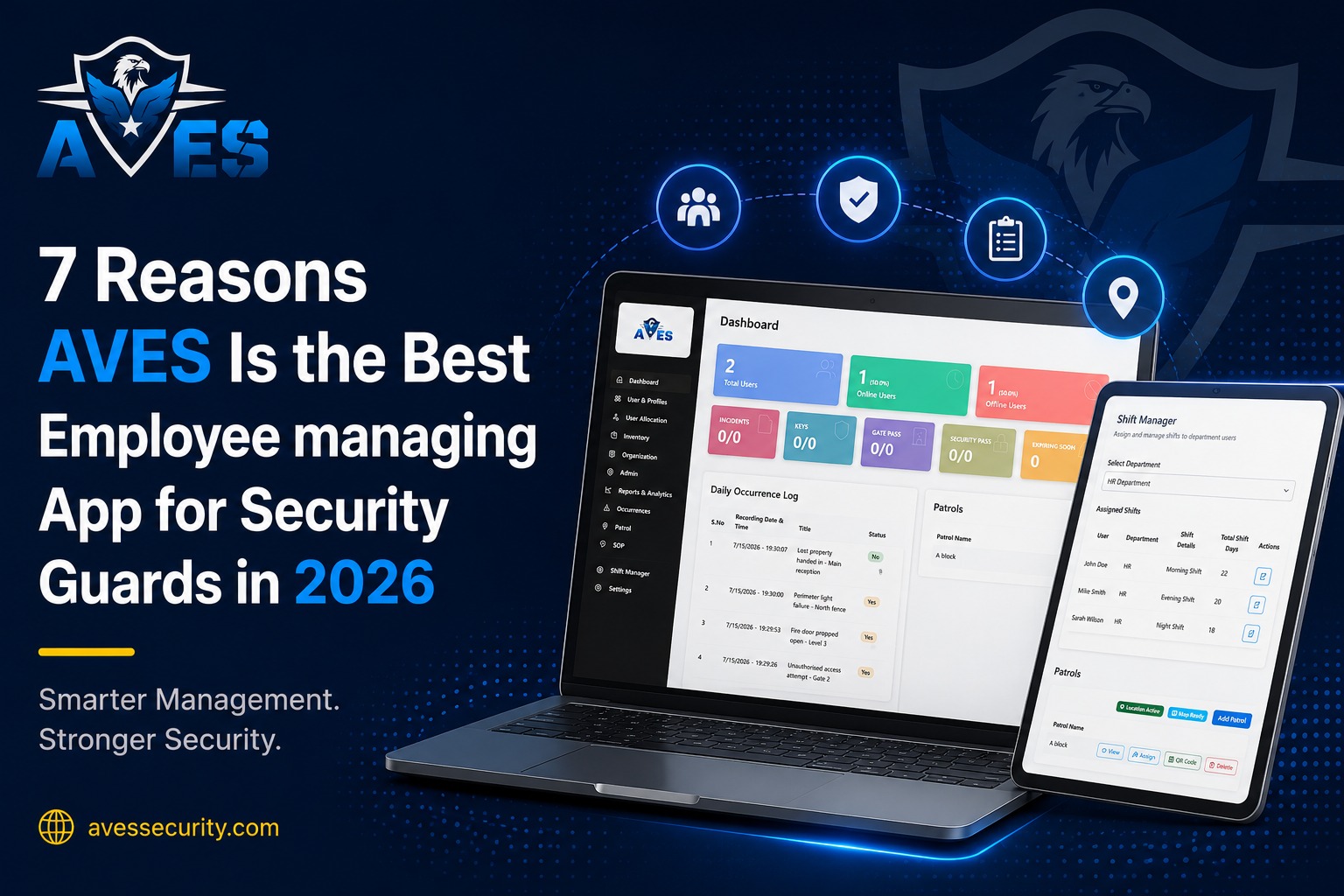
  • “7 Reasons AVES Is the Best Employee managing App for Security Guards in 2026”

    “7 Reasons AVES Is the Best Employee managing App for Security Guards in 2026”

    An employee-managing app for Security Guards is no longer a nice-to-have for modern security companies. At 11 PM, a client calls asking whether a guard completed checkpoint 4. The guard says yes, but without verified patrol data, you’re left relying on trust instead of proof. That’s exactly the problem AVES is designed to solve.

    If that sounds familiar, you’re not alone and honestly most tracking apps won’t fix it either. They’re built for delivery drivers and warehouse clock-ins, not for guards who need patrol proof and access logs a client can actually push back on.

    AVES was built around that specific problem. Here’s why it works.

    An employee-managing app for Security Guards helps security companies replace manual tracking with real-time visibility, verified patrols, and digital reporting.

    An Employee Managing App for Security Guards helps security companies monitor patrols, manage attendance, track incidents, and improve communication across multiple client locations. Instead of relying on paper records, supervisors gain real-time visibility into guard activities and can respond quickly to operational issues.

    1. Employee managing App for Security Guards: GPS That Actually Proves the Round Happened

    A dot moving on a map doesn’t tell you much. Was the checkpoint scanned? Or did he sit in the break room for twenty minutes and walk back?

    AVES ties GPS to checkpoint scanning, so every round leaves a timestamped record. Skip a checkpoint and it flags right away instead of surfacing during a client’s audit three weeks later.

    Nobody thanks you for a clean shift. They remember the one night it wasn’t and “he was probably there” doesn’t hold up when someone’s asking questions.

    An employee-managing app for Security Guards should do more than record attendance. It should create a searchable record of every visitor, entry and approval.

    This is why an employee-managing app for Security Guards becomes essential as security companies expand across multiple client sites.

    2. Incidents get logged on the spot

    Paper notes. A text message an hour later. By the time it reaches a supervisor, half the details are gone and the photos don’t exist.

    Guards file straight from the scene in AVES, photos and video included and the supervisor gets pinged instantly. Not the next morning over coffee.

    An Employee managing an app for Security Guards ensures every incident is documented with accurate timestamps, photos, and location details for future reference.

    3. Access control that’s a real log, not a clipboard

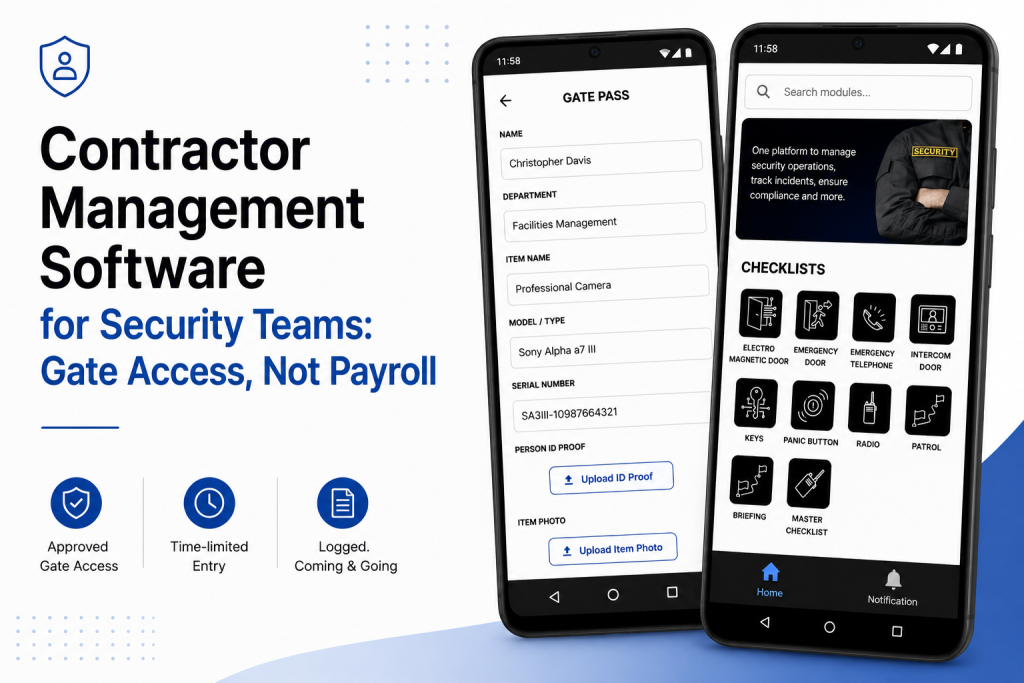
    Plenty of companies say “access control” and mean a sign-in sheet taped to the front desk. AVES does visitor registration, gate passes, approvals, all searchable.

    Client asks who was on site last Tuesday at 3pm? You answer in ten seconds. Insurance adjusters ask this exact question after almost every incident, by the way.

    A reliable Employee Managing App for Security Guards also improves visitor management by maintaining accurate digital records of every entry and exit. This helps security companies provide clients with transparent reports while reducing manual paperwork and administrative errors.

    4. Shift changes stop living in WhatsApp

    Someone needs a day off. Someone wants to swap. Someone’s texting you at 6am about a shift starting in an hour.

    None of it gets tracked when it happens over chat. AVES puts all of it, leave, swaps, schedule changes, in one place. Fine at 10 guards. A genuine mess at 40 across five sites.

    5. One app instead of five logins

    Most security companies don’t set out to run five separate apps. It just happens. One for GPS, one for incidents, one for access, one for scheduling, one for reports.

    AVES puts it all in one place. Less exciting to talk about than GPS tracking, but it’s usually the reason people actually stick with a platform long term.

    Using an employee management app for Security Guards reduces the need for multiple software platforms, improving efficiency and operational control.

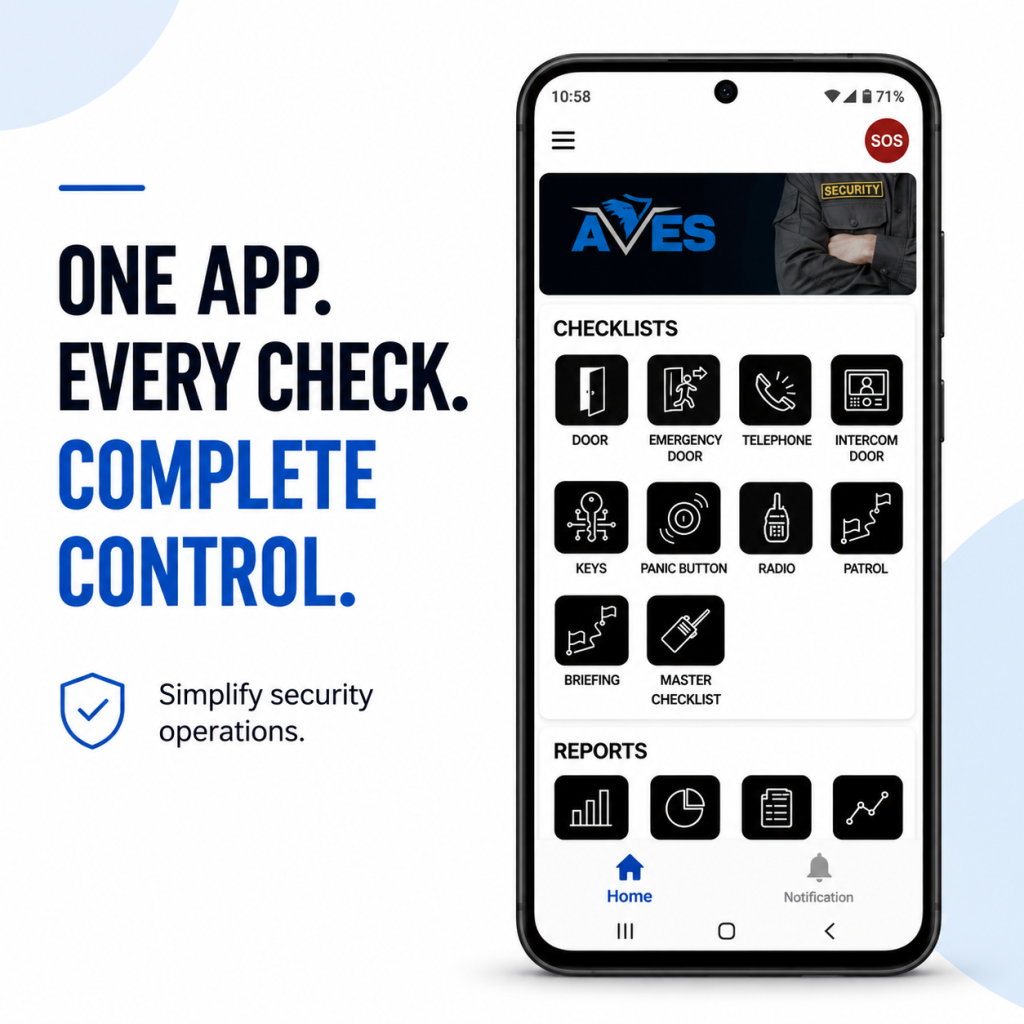
    Investing in an Employee Managing App for Security Guards allows supervisors to manage guards, schedules, patrols, and reports from a single platform. This centralised approach saves time and improves overall operational efficiency.

    6. Reports that hold up if someone actually asks

    Everything in AVES gets timestamped automatically. So when an audit or a legal question comes up, there’s a real trail instead of trying to remember what happened last quarter.

    Companies on government contracts or insurance-heavy work tend to care about this one more than any other feature, for obvious reasons.

    7. Doesn’t fall apart once you grow

    Works great for five guards on one site, then breaks completely once you’re managing multiple sites and supervisors. That’s the usual story with basic tracking apps.

    AVES gives you one dashboard across sites, so nobody’s logging into six systems to check six locations. And switching platforms later isn’t just a hassle, it risks a gap in your records at the worst possible time.

    Choosing the right Employee managing App for Security Guards helps eliminate manual tracking, improve accountability and simplify operations across every location.

    Why security companies are switching to this kind of app

    Add a second client site and the old way of doing things starts cracking. Add a third and it’s basically gone. Phone calls, paper logbooks, someone’s memory of what happened Tuesday, none of it holds up once you’re not physically at every site yourself.

    That’s really why firms move to an employee managing app for security guards. Not because paper is old-fashioned, but because a supervisor can’t be everywhere and a dashboard can.

    With patrols, incident reports and checkpoint scans in one place, a supervisor checks a screen instead of calling five sites to ask if everything’s fine. Smart Track GPS is what actually backs this up, since it confirms a patrol happened where and when it was supposed to, not just that a phone was somewhere nearby.

    Swap the paper visitor register for real access control and you get an actual record instead of a guess about who came through the gate. Add a request management system for leave and shift swaps and a good chunk of the admin work that eats a supervisor’s afternoon just disappears.

    None of it’s flashy. It’s mostly just fewer places for things to fall through the cracks.

    How to choose the right employee managing app for security guards

    Not every tracking app on the market was built for security work. Most were designed for delivery drivers or field sales reps and it shows the moment you actually need to verify a patrol or document an incident properly.

    A few things worth checking before you commit to anything.

    Patrol verification matters most. Look for Smart Track GPS paired with digital checkpoint scanning and real-time incident reporting. Without these, you’re basically back to trusting a guard’s word that a round got done.

    Access control is the next one people skip and regret later. You want the best access control software handling visitor registration, gate passes and entry approvals in one system, not a paper register nobody can search when a client or auditor actually asks a question.

    Then there’s the admin side. A proper request management system for leave, shift swaps and scheduling changes means supervisors aren’t buried in texts and phone calls trying to keep staffing straight.

    And last, think ahead. A platform that works fine for one site can fall apart the moment you add a second or third. The right employee managing app for security guards should hold up whether you’re running one location or twenty, with reporting and documentation that don’t need to be rebuilt every time you grow.

    When evaluating an Employee Managing App for Security Guards, choose software that offers GPS patrol verification, incident reporting, shift scheduling, visitor management, and detailed analytics. These features help security companies maintain accountability while improving client satisfaction.

    A few honest limitations

    AVES needs a connection for full functionality. It handles some offline work, syncing once you’re back online, but constant dead zones will slow real-time reporting down.

    Guards used to paper logs usually need a week or two before checkpoint scans feel automatic. That’s normal.

    And no platform replaces an actual supervisor looking at the data and doing something with it.

    Along with using an Employee managing App for Security Guards, security companies should follow industry best practices published by ASIS International and workplace safety guidance from OSHA to strengthen security operations and compliance.

    Modern security companies increasingly rely on an Employee Managing App for Security Guards to simplify workforce management and ensure every patrol, incident, and visitor record is accurately documented. The right platform supports both small teams and large multi-site operations.

    Worth trying before you decide

    If you’re small, start with patrol tracking and incident reporting. Add access control and multi-site tools once you actually need them.

    If you’re already stretched across sites and tired of guessing, that’s the exact problem AVES was built for.

    If you’re looking for an Employee managing App for Security Guards, AVES combines GPS patrol tracking, incident reporting, access control and workforce management in one platform.

    Want to see it on your own sites? Book a free demo.

    AVES is an Employee managing App for Security Guards designed to help security companies improve accountability, streamline operations, and deliver better service to clients.

    Choosing the right Employee Managing App for Security Guards is an investment in better security operations. With AVES, companies can improve accountability, reduce manual work, enhance client trust, and manage every aspect of guard operations through one intelligent platform.

    FAQs

    Is AVES only for large security companies or can small teams use it too?

    Small teams use it too. A lot of companies start with just patrol tracking and incident reporting for five or ten guards, then add access control and scheduling once they actually need it. You don’t have to turn on every feature on day one.

    How is this different from a basic GPS tracking app?

    A basic app just shows where a phone is. That’s it. AVES ties GPS to checkpoint scans, so you know a patrol actually happened at a specific spot, not just that someone’s phone was somewhere nearby. That difference matters a lot when a client starts asking questions.

    What happens if a guard’s phone loses signal on site?

    AVES handles basic offline work and syncs everything once the connection comes back. If a site has constant dead zones though, expect some lag in real-time reporting until it reconnects. Worth checking your site’s coverage before you roll it out.

    How long does it take guards to actually get used to it?

    Usually a week or two, especially for guards coming from paper logs. It’s not complicated, but any change in daily routine takes a bit of adjusting. Nothing unusual there.

    Can clients or auditors get access to the records if they ask?

    Yes. Everything gets timestamped automatically, so pulling up who was on site, when a checkpoint was scanned or what happened during an incident takes minutes instead of digging through old logbooks or texts.

    Does it replace the need for a supervisor?

    No and it’s not meant to. AVES gives supervisors the data to work with faster. Someone still has to look at the reports and act on what they show.

    We’re already running separate apps for GPS, incidents and scheduling. Is switching worth the hassle?

    Depends on how many sites you’re managing. At one or two sites, separate apps are annoying but manageable. Once you’re running multiple sites with different supervisors, having everything in one dashboard usually saves more time than the switch costs.

    How do we get started?

    Most companies book a free demo first, see how it works on their actual sites with their actual guards, then decide. No need to commit to anything before that.


    Why should security companies invest in an Employee Managing App for Security Guards?

    An Employee Managing App for Security Guards improves patrol verification, attendance tracking, incident reporting, visitor management, and workforce scheduling. It helps security companies reduce paperwork, improve accountability, and deliver faster, more transparent reporting to clients.

  • security Guard Management Software: 5 Powerful Reasons to Replace Manual Processes

    security Guard Management Software: 5 Powerful Reasons to Replace Manual Processes

    Security Guard Management Software is helping security companies replace manual processes with real-time tracking, automated attendance, digital incident reporting and instant client updates. If you’re still relying on paper logs, WhatsApp messages and manual check-ins, it’s time to modernise your operations.

    Phone rings at 11 PM… A client wants to know if the guard actually showed up at Site 4 tonight. Truth is, you don’t know…

    That’s not a guard problem. It’s an information problem and it’s the exact gap Security Guard Management Software exists to close.

    Security Guard Management Software gives security companies real-time visibility into guard activities, attendance and incident reporting.

    Most guards actually do the job fine. The breakdown is usually that nobody above them can see what’s happening until it’s already over. Patrol logs get written up from memory. Incident reports land the next morning. Attendance gets “confirmed” over a phone call, which doesn’t really confirm anything.

    Owners often try to patch this by adding more people, more check-in calls, a stricter policy that quietly dies by week two. It rarely works, because you’re piling manual steps on a system already buckling under manual steps. The ones who actually break the cycle stop adding people and just make the information visible on its own.

    Security Guard Management Software is transforming how security companies manage guard operations, patrols, attendance, incident reporting and client reporting through real-time visibility and automation.

    Guard Management Software is transforming how security companies manage guards, patrols and client reporting.

    1. Security Guard Management Software Builds Client Trust

    Clients today don’t just want a body at the gate, they want proof things got done. Can’t pull up a timestamped patrol record in under a minute? That plants doubt, even on a night your team did everything right.

    When you can pull that record up the second someone asks, the doubt doesn’t even get a chance to start.

    2. You’re Losing Hours You Won’t Get Back

    Every time a supervisor burns 40 minutes reconciling paper logs or chasing down confirmation calls, that’s 40 minutes not spent running the business.

    Automatic attendance, patrol and incident records take that admin work off the plate. Supervisors end up managing security again rather than paperwork. This is why many companies invest in Security Guard Management Software to automate daily operations.

    3. You’re Losing Contracts You Didn’t Even Know Were on the Line

    More commercial clients now want compliance reports and audit trails before they’ll renew. Competitor hands theirs over in five minutes, you need two days to pull yours together, guess who looks more put-together. Doesn’t matter if your guards are just as good or better.

    Companies that can produce a clean report on the spot tend to hold onto contracts longer, mostly because they look ready the moment it counts.

    Security Guard Management Software helps generate audit-ready reports in minutes instead of hours.

    4. There’s More Legal Risk Here Than You’d Think

    If something happens and there’s no real record from the moment it went down, you’re stuck relying on someone’s memory written up hours later. Rough spot to defend if anyone ever questions it.

    A timestamped digital record gives you something solid to point to instead. Changes the whole conversation if it ever comes to that.

    Security Guard Management Software creates secure digital records that improve compliance and reduce legal risks.

    5. The Bar Has Moved and Clients Know It

    The industry’s been pushing toward documented, auditable processes for years now. Clients shopping around for vendors have picked up on it too, even if they don’t ask for it in those exact words.

    Many organizations also follow security management best practices published by ASIS International.

    How Security Guard Management Software Changes Daily Operations

    Not going to pretend this fixes bad hiring or a supervisor who checks out mentally, because it doesn’t. What it fixes is visibility. And fixing visibility ends up solving a lot of stuff downstream almost by accident.

    Guard scans a checkpoint on their phone, it hits your dashboard right then. Something happens on site, the report with photos comes through while it’s still happening, not after the shift wraps. Attendance stops being “I think he’s there” and turns into an actual confirmed check-in tied to location. Reports that used to eat an afternoon are basically already built by the time you need them.

    Security Guard Management Software saves supervisors valuable time by automating reporting.

    None of it requires your guards to suddenly become tech people either. Most pick up scanning a checkpoint or filing a quick report in about the time it takes to show them once.

    What Nobody Really Tells You Upfront

    Switching off manual processes isn’t instant. Not pretending otherwise.

    Expect a week or two of people getting used to it. A few of your longer-tenured guards might grumble at first, that’s just normal and it usually fades once they realize it’s actually less work, not more, since they’re not writing the same thing down twice.

    You’ll also need decent signal at your sites. A good system rides out short offline patches and syncs back up once you’re connected again, but it’s not built for spots with zero connectivity long term.

    And no platform fixes a bad hire or a supervisor who isn’t actually supervising. What it does is let a decent team be managed properly instead of managed by guesswork. Anyone tells you switching systems is friction-free overnight, I’d take that with a grain of salt.

    What to Look for in Security Guard Management Software

    Real time incident reporting with photo or video, not just a text box someone fills in later. Checkpoint scanning that creates an actual timestamped record instead of a box anyone could tick from memory. One dashboard for every site, not five different logins. Reports you can pull in minutes when a client or auditor asks. A mobile app simple enough that you’re not running a training session just to get guards using it.

    If a platform can’t walk you through all five of those clearly, it’s probably not there yet.

    Why Choose AVES Security Guard Management Software

    This is basically the whole point of AVES Security Guard Management Software…, moving security teams off manual processes and into real time visibility across every site.

    AVES Security Guard Management Software moves security teams off manual processes… and provides real-time visibility across every site.

    Patrol tracking and checkpoint scanning give you actual proof instead of a guess. Incident reports come through the moment something happens, photo and video included. Geo-based attendance confirms guards are physically where they’re supposed to be, not just where they said they were. One dashboard, every site. Audit-ready reports in minutes, not the night before a meeting.

    None of it replaces your team. It just gives you the visibility to actually trust what they’re doing and hands you your evenings back instead of spending them on the phone.

    One Honest Question to Ask Yourself

    If a client called right now wanting proof of what happened at every site last night, could you show them in under five minutes?

    If not, that’s worth fixing and it’s a smaller fix than most owners expect.

    Investing in Guard Management Software helps improve accountability, efficiency and client confidence.

    AVES offers a free trial and a personal demo, so you can see how it’d actually work for your operation before committing to anything.

    FAQs

    1. What is Security Guard Management Software?

    A platform that handles guard scheduling, attendance, patrols and incident reports in one place. No more paper logs or end-of-day catch-up calls.

    2. How does it improve daily operations?

    Attendance logs itself, patrols get verified in real time and reports are built automatically. Supervisors spend less time chasing information and more time managing sites.

    3. Does it help retain clients?

    Yes. Clients want proof, not promises. Instant access to patrol and incident records builds trust fast.

    4. Is it worth it for small companies?

    Definitely. Whether you run 8 guards or 300, the software scales with you. No extra staff needed.

    5. What features matter most?

    GPS check-ins, checkpoint scanning, photo/video incident reports, automated client reports, a clear supervisor dashboard and offline support for weak-signal sites.

    6. How long does the switch take?

    Just a few days. It’s simpler than paper, so guards adapt fast.

    7. Do guards need tech skills?

    No. Checking in, scanning checkpoints and filing reports takes minutes to learn.

    8. Why ditch manual processes?

    Because they fail silently. Missed patrols, late reports, gaps you only discover when a client asks. Software closes that gap and makes you look sharper.

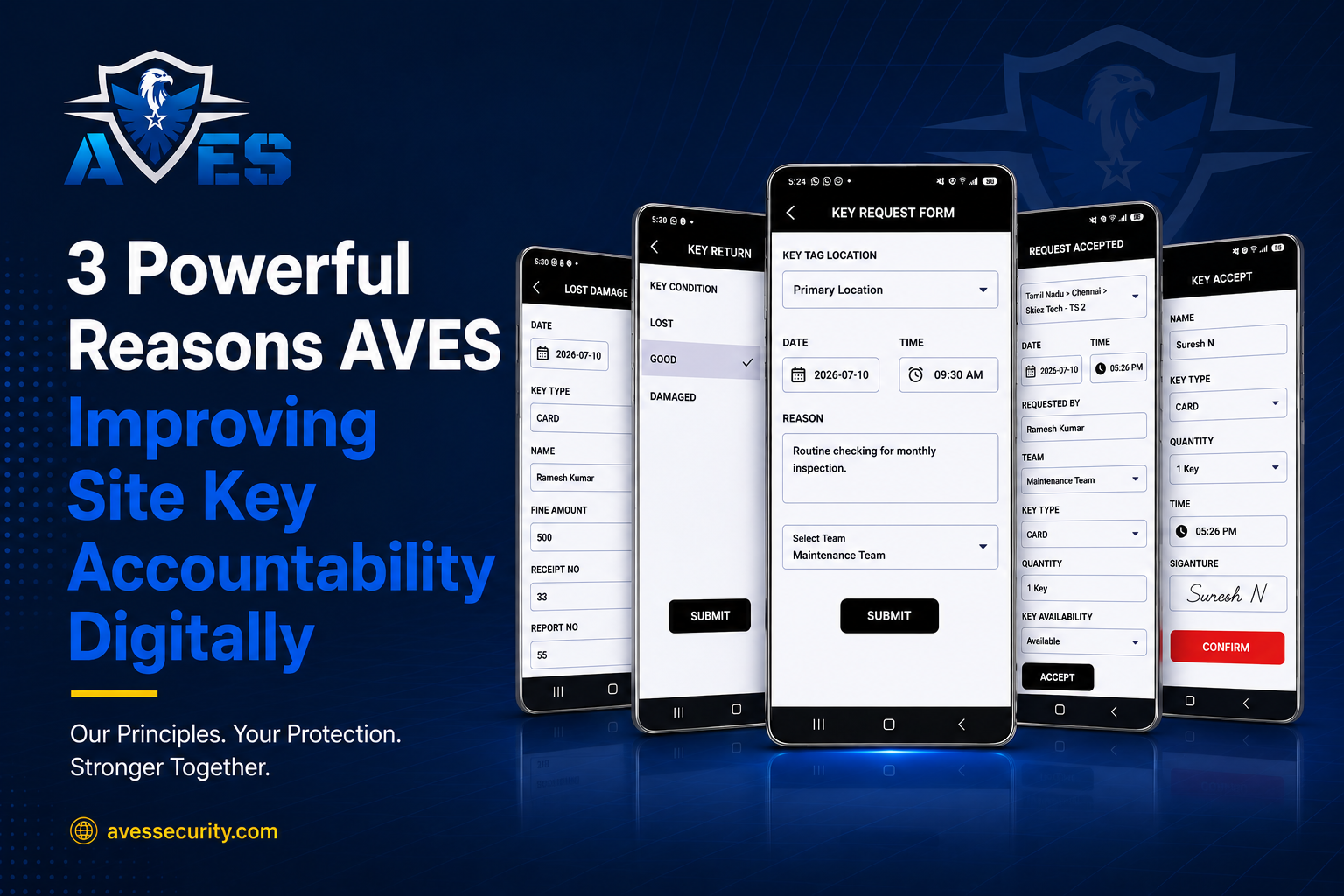
  • 3 powerful Reasons AVES Improving Site Key Accountability digitally

    3 powerful Reasons AVES Improving Site Key Accountability digitally

    The AVES Security Guard Management App is a powerful security workforce management solution designed to simplify guard scheduling, attendance tracking, patrol monitoring, and incident reporting. In 2026, businesses are adopting AVES Security Guard Management to improve efficiency and strengthen security operations.

    Here’s a strange truth about security operations: the oldest technology in the building is usually the least accounted for. Cameras get firmware updates. Access cards get reissued the moment someone leaves the company. Alarm panels get swapped out every few years. And yet the master key to the server room? Still living on a nail behind the guard desk, tracked by a laminated sign-out sheet that half the shift forgets to touch. AVES’s Keys module exists because of that gap, plain and simple.

    The Problem Nobody Talks About

    Ask any ops manager what keeps them up at night and they’ll mention cameras, alarms, maybe access control software. Almost nobody says “keys.” That’s exactly the problem.

    Take a mid-size site, a warehouse or a gated community, and count how many keys move hands in a single week. Guards, supervisors, tenants, contractors, the maintenance guy who shows up twice a month. All of it usually runs through a paper register. Sign it out, write the time, sign it back in at shift’s end. Simple in theory.

    In practice it falls apart fast. A key gets passed between two guards mid-shift-change and nobody writes it down. The register gets skipped entirely because an alarm went off, a delivery truck showed up, or a visitor needed escorting and the logbook just wasn’t top of mind. A key goes missing for a full day before anyone even notices, usually right when someone needs that exact door open.

    None of these gaps look dramatic on their own. But stack enough of them up and the register stops being a record of what happened. It becomes a guess. And a guess is a bad foundation when the entire point of a key log is answering, with certainty, who had access to what space at what time.

    There’s also a quieter cost that rarely makes it into the conversation: time. Guards and supervisors spend real hours every month hunting for a missing key, tracking down whoever had it last, sometimes re-keying an entire lock because a master key vanished. Nothing about that is exciting. It’s just waste.

    What Keys Actually Does

    The Keys module takes that whole process and moves it off paper. Every issue, every return, gets logged the moment it happens, closing the gaps that come standard with a handwritten register. Guard checks out a key at shift start, hands it to a supervisor for a specific task, returns it at the end. All of it timestamped. Who, when, and what.

    No more single shared notebook that can be lost, skipped, or filled in from memory an hour later. AVES builds a continuous digital trail for every key in circulation, and because it’s captured at the moment of the transaction, nobody can quietly backdate an entry to cover a gap. The record shows what happened, not what someone remembers happening after the fact.

    Suddenly a task everyone treated as background admin work becomes something you can actually govern. A record that’s current the second you need it, not reconstructed after a problem already occurred.

    Why It Sits in “Core Operations”

    AVES groups six modules as the backbone of a well-run deployment: Patrol, Incident Report, Pocket Book, Briefing, Occurrence, and Keys. None of these are tucked away as optional extras. They’re the tools that shape guard accountability and shift discipline on an hour-by-hour basis.

    Keys belongs on that list because access control starts with a physical key long before any electronic system enters the picture. You could have cameras on every entrance and card readers on the front doors and still be wide open if a master key to a rooftop or a storage room can’t be accounted for during a single shift. It’s the low-tech piece that gets overlooked precisely because it feels too ordinary to matter, right up until it does.

    It also connects naturally to the other modules. A missed patrol checkpoint, or a strange entry in an Occurrence log, usually raises one question: who could have gotten into that space, and when. With a clean key record, that question has an actual answer instead of a shoulder shrug.

    Where the Business Value Shows Up

    The payoff of a full digital trail becomes obvious the first time something goes wrong. Restricted area gets accessed without authorization? Client wants to know who held a particular key on a particular night? A company running AVES answers that immediately, down to the guard and the minute, instead of flipping through a paper register that may or may not have been filled out for that shift.

    A few places where that shows up directly:

    Disputes get resolved faster. If a tenant claims their unit was entered without permission, having a clear record of which keys were out and who held them turns a drawn-out argument into a five-minute conversation.

    Guard behavior improves on its own. Once guards know every handoff is logged automatically rather than left to memory, they naturally get more careful with how keys move. The accountability is baked into the process instead of added on top of it.

    Daily friction drops. Fewer lost keys means less searching, less emergency re-keying, fewer disruptions. And because the system flags a key that hasn’t come back on schedule, problems surface in hours instead of days.

    Audits stop being a scramble. Sites under regulatory or contractual obligations, factories, secure facilities, gated communities, often need exactly this kind of documentation. Having it ready on demand beats reconstructing it manually the night before an audit.

    The Bigger Picture

    Keys lives inside AVES’s Core Operations layer next to Patrol, Pocket Book, and Briefing, the modules covering the everyday tasks a guard runs through on a normal shift. Put together, they replace the entire paper trail of a guard’s workday.

    Think about it like this: Patrol proves a guard physically covered the site. Keys proves the site’s access points stayed controlled during that same window. One tracks movement, the other tracks access. Different halves of the same accountability story.

    That’s really the shift AVES is going for. Moving a company from “we believe this happened” to “here’s the record proving it happened.”

    A Small Feature, A Bigger Impact Than It Looks

    It’s easy to write off key management as boring compared to surveillance systems or emergency protocols. But a key is often the most direct access control point a site has. More immediate than a camera. More physical than an alarm going off after the fact. A key in the wrong hands, or one nobody can locate, is a live vulnerability no matter how advanced everything else on-site looks.

    That’s the case for Keys, really. No new hardware, no new locks, no complicated rollout. Just a process every site already runs, issuing and returning keys, made visible and permanent instead of scribbled on a sheet nobody double-checks. For any security company deciding where to start with digital transformation, this unglamorous little process is a good place to begin.

    Contact Us: www.avessecurity.com

    ⁠https://www.cisa.gov⁠�

    How does AVES prevent guards from lying about checkpoint visits?

    AVES uses GPS to make sure guards are actually at the checkpoints. They have to be standing at the location to log it. This way guards cannot pretend they were somewhere they were not. AVES makes sure guards are honest about their checkpoint visits.

    Can supervisors see what’s happening during a patrol or after the fact?

    Supervisors can watch patrols happen in time with AVES. They do not have to wait for a report that may not even be read. If a guard misses a zone supervisors will know about it within minutes. They will not have to wait for a client to call and complain about the missed zone.

    What if a guard says they checked a location. It looks doubtful?

    AVES solves this problem with photos and videos. Every checkpoint can have a photo that is taken at the time of the visit. This photo proves the guard was actually at the location. If the photo is blurry, it will not be accepted as proof. AVES uses photo and video proof to make sure guards are telling the truth about their visits.

    Do supervisors have to chase guards down to know if something’s wrong?

    No they do not. AVES will automatically alert supervisors if a guard is late, absent or off-route. Supervisors do not have to spend their time chasing down guards to find out what is going on. AVES makes it easy for supervisors to know if something is wrong.

    Why does this matter more than it look like it should?

    This matters because it is about being honest and transparent. Guards do a job when they know someone is watching. Supervisors can manage better when they have all the information. Clients trust the guards more when they can see the proof for themselves. AVES is about making sure everyone is honest and doing their job.


  • Security Guard Tracking System: Catching Missed Patrols in Real Time

    Security Guard Tracking System: Catching Missed Patrols in Real Time

    A security guard tracking system shows supervisors where officers are and what they have completed while the shift is still running — flagging a missed patrol as it happens, rather than revealing it in a report the next morning.

    The AVES Smart Security Guard Management App is a powerful smart security workforce management solution designed to simplify guard scheduling, attendance tracking, patrol monitoring and incident reporting.In 2026, businesses are adopting AVES smart security guard mangement to improve efficiency and strengthen security operations.

    Three hours. That’s usually how long it takes before you hear about something that already went wrong on site. A guard skips a patrol checkpoint, nobody notices and then the client calls asking why. Or you need an incident report pulled together fast, except the details are scattered across three notebooks, a spreadsheet nobody bothered updating and a group chat that’s basically become a graveyard nobody checks anymore.

    None of that is on you or your guards. It’s on the systems. Most security operations are still running on tools built to explain what already happened, not warn you while it’s happening. That lag between the moment something goes wrong and the moment you actually find out is where most security failures live. AVES security guard management exists to close that gap.

    Why Guard Management Still Feels Like Guesswork

    Paper logs. Radio check-ins. Incident reports written from memory after the shift ends. It works, technically, kind of like a smoke detector running on a dead battery. Fine, until the one night it actually matters and then it’s not fine at all.

    Here’s what that setup actually costs you. A missed patrol only comes up once a client mentions it first. An incident report gets written hours later and by then half the details have already gone soft. Proving compliance during an audit means digging through paperwork instead of pulling up a dashboard. Guard performance gets judged on impression instead of anything you can actually point to. client trust erodes slowly, one unanswered question at a time, because nobody can show exactly what happened on site that day.

    None of that is a people problem. It’s a memory problem. The system has none, so it can’t flag anything until the issue is already too big to fix quietly.

    What Real-Time Awareness Actually Looks Like in AVES Security

    Nothing mystical about it. It just means catching something before the obvious signs show up, instead of after.

    AVES Smart security guard management brings guard scheduling, patrol tracking, incident reporting and compliance monitoring into one connected platform, instead of five separate habits your team is juggling. A missed patrol shows up the second it happens, not buried in a weekly summary. An incident gets logged right on-site, photos and timestamps attached in the moment, so there’s an actual record before anyone’s memory has time to get fuzzy on the details.

    Where This Actually Makes a Difference

    You’ve probably tried a “security app” before and walked away unimpressed. Fair. Here’s what’s genuinely different about this one.

    Real-time guard tracking kills the guesswork. You know exactly where your officers are and whether they’ve completed their rounds, no phone calls required. That single change wipes out most of the “why did the client find out before we did” moments.

    Incident reporting happens where the incident actually happens. A guard can attach a photo or video straight from their phone, right as it occurs. Doesn’t sound like a big deal until the first time you need to defend that report to a client or an insurance adjuster and suddenly it’s the only thing that matters.

    Compliance stops being a last-minute scramble. Every checklist, every timestamp, every report is stored automatically and sits ready to export. When the audit shows up, nobody’s digging through a filing cabinet the night before.

    Performance data finally replaces assumptions. You can see which shifts, sites, or officers actually need attention, backed by real numbers instead of a hunch.

    What Nobody Tells You Before You Switch

    No platform fixes a broken process on its own. Anyone claiming otherwise is selling you something.

    Moving from paper logs to a digital system takes a short adjustment period. Guards need a quick onboarding, even if the learning curve itself is light. Give it a week or two before it starts feeling normal.

    You also need buy-in from the field, not just from management. A system like this only works if guards are actually using it during their shifts. The good part is most guard-facing tools are simple enough that resistance fades fast, especially once people realize it saves them from filling out paperwork at the end of a twelve-hour shift.

    Like most operational changes, the real value shows up over weeks and months, not day one. The first patrol you track digitally won’t feel like a breakthrough. The first audit you clear in twenty minutes, because every record was already sitting there, will.

    What Actually Changes Once It’s Running

    Here’s the part that matters more than any feature list.

    Right now you’re probably carrying a quiet worry that something is slipping through the cracks somewhere in your operation and you won’t know until it costs you a client or your reputation. That worry is exhausting even on the days nothing’s actually gone wrong.

    A connected security operations platform like AVES smart security guard management doesn’t erase every risk in physical security. Nothing does. What it removes are the blind spots that let small problems snowball into big ones and it gives you proof of what your team is actually doing, in real time, without you having to chase it down yourself.

    That’s the real sixth sense here. Not prediction. Just finally seeing clearly, at the moment it counts, instead of piecing it together after the fact.

    Where You’d Actually Start

    If any of this sounds familiar, you don’t need a total overhaul. You need one platform doing what your current setup is already trying to do with far too many moving parts.

    Start by mapping out your blind spots. Where do you find out about problems late? Where is paperwork slowing your team down? Those answers point straight to what a system like AVES smart security guard mangement should fix first for you.

    The goal was never to pile on more software. It’s giving your operation the awareness it’s been missing the whole time.

    You already know where the cracks are. Nobody has to sell you on that. You’re the one who cleans up when one opens.

    Maybe it’s the guard who swears he hit the loading dock, and maybe he did, but “trust me” isn’t a patrol log. Maybe it’s the client who called last month wanting proof of a check you couldn’t produce. Or maybe it’s simpler and worse: that low hum of knowing something somewhere is slipping right now, and you won’t find out until it’s already sitting on your desk as a problem.

    Bringing in AVES smart security guard management doesn’t just patch today’s reporting gaps. It tells your clients, your guards and your competitors something about how you run things. It tells clients you’ve got nothing to hide. It tells your guards their work actually gets seen. And it tells everyone else in the market that you’re not the outfit still running on paper logs and phone tag in 2026.

    The firms pulling ahead right now aren’t winning because they have the most guards on payroll. They’re winning because they have the most trust. AVES smart security is how you build that, prove it and keep it. Shift after shift, client after client.

    Every shift you run on AVES smart security guard management is proof, not a promise. It’s evidence you can put in front of a client without blinking, an edge over the next guy still chasing paper logs, momentum that builds with every scan and every log entry. This isn’t leverage you talk about. It’s leverage you can show. The gap between you and your competitors isn’t guards on payroll. It’s trust, earned and verified, shift after shift, until it becomes your standard, your reputation, the backbone of how you operate. That’s not a purchase. That’s how you win.

    Contact Us: www.avessecurity.com

    https://www.securityindustry.org/⁠�

    How is AVES smart securitydifferent from the other security apps we’ve tried?

    Here’s what most people miss: nearly every security app on the market just digitizes the same paperwork you were already doing. That’s not innovation, that’s a PDF with extra steps. AVES smart security closes the actual gap that matters, the time between something happening on site and you finding out about it. Real-time guard tracking, incident reporting from the field and compliance records that build themselves. That’s the difference between a tool and a glorified clipboard.

    Does AVES smart security catch missed patrols as they happen, or just log them afterward?

    As they happen. A missed checkpoint gets flagged the second it’s missed, not on Friday when a client asks why nobody checked the loading dock. Real-time awareness only counts if it’s actually real-time. Anything else is just a fancier logbook.

    Will AVES smart security guard management actually help us during an audit?

    Every checklist, timestamp and incident report gets stored automatically and stays export-ready. So when the auditor shows up, you’re not digging through a filing cabinet or piecing together last quarter from three different inboxes. It’s already sitting there, waiting.

    What’s this “sixth sense” AVES smart security is supposed to give us?

    It’s not a crystal ball. It’s early awareness, plain and simple. You get a live, accurate picture of every site at once, so you catch problems while they’re still small instead of finding out after they’ve already turned into a headline.

    How does AVES smart security help with guard performance tracking?

    It swaps out gut feeling for actual numbers. Instead of guessing which shift or site or officer needs attention, you can see it in the data. Same way a fitness tracker beats “I think I walked a lot today”, the numbers don’t lie and they don’t have a bad memory either.

    Do we need field buy-in, or is management enough?

    Both, and don’t kid yourself otherwise. AVES smart security only works if guards are actually using it on shift, not just something leadership signed off on in a meeting. The upside is the guard-facing side is simple enough that adoption usually goes smoother than people expect going in.

    Real-time tracking only works if the patrol itself is verifiable. Our guide to the guard tour system explains how checkpoint scanning proves a round actually happened.

  • BEST security Guard Management Software vs Manual Operations: What It Actually Costs You to Wait IN 2026

    BEST security Guard Management Software vs Manual Operations: What It Actually Costs You to Wait IN 2026

    Security guard management software replaces the hidden costs of manual security operations — late reports, unverifiable patrols, hours lost to paperwork and audits — with one system that records the work as it happens.

    Guard Management Software helps security companies replace manual operations with digital scheduling, patrol tracking and reporting. Yet many businesses continue relying on paper-based processes because they believe their current system is “good enough.” That decision often creates hidden costs that slowly reduce efficiency and profitability. You keep telling yourself it works fine. And technically sure it does. Nothing’s caught fire yet. So the switch to proper software keeps sliding to next quarter then the one after. What nobody says out loud is that waiting isn’t some neutral pause button. Every month you stay on manual operations you’re handing over money you’ll never see itemized anywhere because inefficiency doesn’t send an invoice.

    Why “it works fine” is a trap

    Guard Management Software helps eliminate these small daily inefficiencies before they become costly problems.

    Manual operations almost never fail in one dramatic moment. They leak. Slowly one missed checkpoint log at a time.

    You don’t notice because the cost never lands as a single number. It’s a guard forgetting to log a checkpoint. A supervisor retyping the same schedule for the third time this month. A client report taking two extra hours because someone’s stitching together three paper logs by hand.

    None of it screams emergency. And that’s precisely why so many firms let this drag on for years. There’s no one event forcing the decision just friction quietly stacking up until it turns into lost margin a wasted Sunday or a client who’s finally had enough.

    Why a Security Guard Management System Makes the Difference

    If you’ve been stalling that’s not laziness talking. There’s an actual reason this feels harder than it should.

    Switching systems feels like the risky move even though staying still is the real gamble. We’re wired that way weighting the visible cost of change way more than the invisible cost of doing nothing differently.

    Software comes with a price tag you see the moment you sign up. Manual inefficiency costs you too just gradually through overtime creeping up an awkward client call a Sunday lost to fixing next week’s roster. Once you put both numbers next to each other the decision tends to make itself.

    How Guard Management Software Reduces Hidden Costs

    Investing in Aves Security Guard Management Software allows supervisors to automate scheduling and reporting instead of relying on paper records.

    Let’s skip the vague warnings and get into real numbers.

    Admin hours nobody’s tracking. Building schedules by hand chasing paper logs pulling together client reports that alone can eat 8 to 12 hours a week for a mid-sized team. At RM 20 an hour that’s over RM 800 a month spent on tasks software finishes in minutes. Run that across a year and you’re near RM 10,000 in labor spent on shuffling paperwork instead of actual security work.

    Overtime you genuinely can’t see. Skip automated scheduling and double-bookings last-minute gaps quietly inflate your overtime bill. Most firms are off by 15 to 20 percent until they finally track it properly. And it’s rarely one big scheduling blunder. It’s a guard covering an extra hour here a shift stretched there dozens of tiny additions nobody flags because there’s no system watching for the pattern.

    Client trust slipping away without you noticing. When a client asks for proof of a patrol and you’re digging through paper folders it doesn’t just look unprofessional. It plants doubt about whether you’re actually running a tight operation. Clients rarely leave over one bad moment. They leave after a string of moments where they weren’t sure what they were even paying for.

    The ROI shows up faster than most people expect. Most firms recover the cost of the software within two to three months purely from cutting overtime and admin hours before you even factor in what it does for client retention. That’s the number most comparison articles never mention. Guard software ROI isn’t some distant payoff. For most teams it’s a near-immediate cut in wasted labor.

    The mistake most owners make

    Security guard management software cost and pricing factors

    Most owners frame this as a technology decision. It’s actually a cost decision that happens to come wrapped in technology.

    Waiting doesn’t make the cost go away. It just shifts it out of your software budget and into your labor costs and client relationships where it’s much harder to spot and even harder to fix.

    According to ASIS International using technology and standardized security guard management software processes can help organizations improve operational efficiency and accountability.

    There’s a second mistake worth calling out too. Some owners assume switching means a rough transition where everything gets worse before it gets better. Fair for a badly built system that can happen. But how disruptive it actually is depends entirely on how the software is designed to bring your team on board which is worth checking before you write off switching out of fear it’ll be a mess.

    When switching actually makes sense

    This is usually the point where Guard Management Software delivers the greatest operational value.

    You don’t need 500 guards on the books to justify this move. You need repeated pain points not a headcount threshold. Watch for these signals:

    You’ve had a client dispute where you couldn’t produce clear proof of a patrol or incident. Scheduling eats more than a few hours of your week. Overtime feels high but you can’t pin down why. You’re pushing past 15 to 20 guards and paper is getting harder to manage consistently. You’ve caught yourself saying “we’ll fix the reporting later” more than once.

    Two or more of those sounding familiar means the math has already tipped in favor of switching even if it doesn’t feel urgent yet.

    What switching actually looks like in practice

    This is where most owners hesitate picturing messy onboarding guards refusing to adapt or operations getting disrupted mid-contract.

    In reality good security guard management software lets your team keep working normally from day one with training measured in hours not weeks. A platform that needs extensive retraining just so someone can clock in or log a checkpoint is a sign of bad design not an unavoidable cost of switching.

    Here’s the realistic version: you import your existing guard roster and site list. Supervisors get a short walkthrough of scheduling and reporting. Guards get a five to ten minute introduction to checking in and logging patrols on their phone. Most teams are running normally within the first week and fully comfortable within the first month.

    Being honest about the trade-offs

    No guard management software fixes a broken operational culture overnight. If your team resists structure or your supervisors aren’t reviewing reports regularly switching systems alone isn’t going to fix that.

    Guard management software gives you visibility and control. It doesn’t make the management decisions for you once you have that visibility.

    Worth setting realistic expectations on timing too. Admin time savings show up almost immediately but the deeper trust benefits with clients build over a few months of consistent provable reporting not overnight.

    Where Aves Guard Management fits into this decision

    Aves Guard Management Software combines scheduling, patrol tracking, incident reporting and compliance in one platform.

    Aves Security Management was built around exactly the concerns raised here. You can also learn how GPS Patrol Tracking Software improves guard accountability and client reporting. Scheduling, patrol tracking, incident reporting and compliance all live in one platform with a setup process most teams complete within days not months.

    You’re not rebuilding your operation from scratch. You’re finally giving it the visibility it should’ve had from the start without loading your team up with complexity they can’t handle on day one.

    Guard Management Software helps security companies reduce paperwork, improve visibility and manage daily operations more efficiently.

    The real question was never whether switching is worth it. It’s how much longer you’re willing to pay the hidden cost of waiting one quiet admin hour and one uncertain client conversation at a time.

    www.avessecurity.com

    How much does manual security operations really cost my business?

    More than most owners realize. A mid-sized team can lose 8 to 12 admin hours a week just to manual scheduling, paper logs and compiling client reports by hand. On top of that overtime tends to run 15 to 20% higher than owners expect simply because nothing is tracking the small scheduling gaps that cause it. None of it shows up as one big expense it just quietly drains your margins over time.

    How long does it take to switch from manual operations to Aves Security guard Management software?

    Less time than you’d expect. Most teams import their existing guard roster and site list give supervisors a short walkthrough of scheduling and reporting and get guards a quick 5 to 10 minute introduction to checking in and logging patrols on their phone. Teams are typically running normally within the first week and fully comfortable within the first month. If a platform needs weeks of retraining just to log a checkpoint that’s a sign of poor design not a normal part of switching.

    How fast will I actually see guard management software ROI after switching?

    Faster than most comparison guides suggest. Most firms recover the cost of the software within two to three months purely from reduced overtime and admin hours before you even factor in the client retention benefits of having provable patrol and incident records on hand.

    Do I need a large team to justify switching to security guard management software?

    Not really. It’s less about headcount and more about recurring pain points. If you’ve had a client dispute you couldn’t resolve with clear patrol proof if scheduling eats several hours of your week or if you’re pushing past 15 to 20 guards and paper is getting harder to manage that’s already reason enough to switch.

    What does Aves Security guard management software actually offer?

    Aves Security guard management software brings scheduling, patrol tracking, incident reporting, and compliance into one platform with a setup process most teams complete in days rather than months. It’s built to give your operation the visibility it should have had from day one without piling on complexity your team isn’t ready for.

  • Security Guard Logbook: Why Digital Beats Paper

    Security Guard Logbook: Why Digital Beats Paper

    A security guard logbook is the record of everything that happens on a shift — patrols, visitors, incidents, keys and handovers. A digital logbook replaces the paper book with timestamped, searchable entries that cannot be back-filled or lost.

    Security Guard Checklist & Logbook Software helps security companies replace paper logs with real-time digital records reducing audit time by up to 50%.It’s midnight before the audit and you’re elbow-deep in binders trying to figure out if 3:47 turned into 3:41 because someone’s pen skipped or because someone actually skipped the checkpoint. You know that feeling. Most security managers do.

    That’s not a personal failure. It’s just what happens when you’re running a modern operation on paper.

    Paper Doesn’t Fail You Loudly. It Fails You Quietly.

    Security Guard Checklist & Logbook Software helps security companies replace paper records with real-time digital records making audits faster improving compliance and reducing manual errors.

    A checklist on a clipboard is fine right up until you need to prove weeks later that something actually happened. Then it’s binders. Then it’s cross-checking shift logs against memory. Then it’s hoping a guard’s handwriting counts as documentation.

    Here’s the part people get wrong: audits rarely blow up because something bad actually happened on-site. They blow up because nobody can prove the routine stuff happened on time. Big difference.

    Digital logs solve this before it becomes a problem not after. A patrol a checkpoint scan an incident note — the second it happens it’s time stamped and geo-tagged automatically. No rewriting it later from memory. No page quietly vanishing between now and next quarter.

    How Security Guard Checklist & Logbook Software Cuts Audit Time by 50%

    AVES digital security guard logbook replacing a paper logbook

    It’s not a number someone made up for a landing page. Three things drive it mostly.

    First you can search records instead of flipping through them. An auditor asking for one site one week one guard gets an answer in seconds instead of an afternoon.

    Second the system flags problems while they’re still small. A skipped checkpoint or a half-empty field gets caught same-day so your supervisor fixes it before the audit not scrambles during it.

    Third reports basically write themselves. No stitching together notes from six different guards at 11pm the night before a client call.

    Where Companies Screw This Up

    The real value of Security Guard Checklist & Logbook Software comes from using structured digital records instead of handwritten logbooks.

    Buying the software was the easy part honestly. The hard part is not dragging your old habits in with you.

    If your guards are still typing “area checked no issues” into a phone instead of a notebook you haven’t upgraded anything — you’ve just made the same weak entry faster to produce. Think of it like moving a messy filing cabinet into a nicer room. Still messy. The real fix is forcing specific objective detail through structured fields — the same discipline a well-run paper log should’ve had all along just faster now and a lot harder to lose.

    And then there’s training or the lack of it. Skip it and the tool your team doesn’t trust becomes the tool your team quietly stops using. How you roll this out matters almost as much as what you rolled out.

    What This Won’t Fix (Be Honest With Yourself Here)

    Software doesn’t erase human error. Your guards still have to actually watch actually document actually follow protocol. Nothing digital changes that part.

    What it changes is friction. An entry takes seconds on a phone instead of minutes with a pen. A supervisor sees a problem today instead of finding it buried in a binder next month. A client gets visibility in real time instead of a PDF two weeks late.

    Give your team two or three weeks. That’s usually enough for phone logging to stop feeling like a chore and start feeling normal.

    Before You Sign Anything

    Ask whoever’s selling you this three things point blank. Can guards log entries offline and sync later? Are the timestamps and locations actually tamper-proof or just labeled that way? Can you customize reports per client without paying for a dev ticket every time?

    If they answer those clearly you’re talking to someone who’s built this for actual fieldwork. If they get vague you’re watching a sales demo. To understand the legal requirements for private security agencies in India refer to the Ministry of Home Affairs Private Security Agencies (Regulation) Act (PSARA) guidelines.

    Bottom Line

    You don’t need to rebuild your whole operation this week. You need records that hold up when someone pushes back on them and a team that can produce those records without a weekend of panic.

    AVES Security Management provides Security Guard Checklist & Logbook Software with digital checklists patrol tracking incident reporting SOS alerts and client reporting in one platform. Security Guard Checklist & Logbook Software helps security companies improve compliance streamline guard operations and maintain accurate digital records for faster audits and better client reporting.

    Book a demo with AVES to see how it can simplify your security operations

    What is Security Guard Checklist & Logbook Software?

    The Security Guard Checklist & Logbook Software is something that helps security companies get rid of paper logbooks. It stores things like patrols and checklists and incidents. What the guards do every day in one safe place.

     How does Security Guard Checklist & Logbook Software make guard patrol tracking better?

    The Security Guard Checklist & Logbook Software tracks what the guards are doing in time. It records when they check in at places and it makes them more accountable with things like GPS and timestamps and digital logs.

    Can Security Guard Checklist & Logbook Software handle incident reporting?

    Yes the Security Guard Checklist & Logbook Software lets guards report incidents away. They can add photos and timestamps. Where they are and write down what happened so people can respond faster.

    How does Security Guard Checklist & Logbook Software make security audits easier?

    The Security Guard Checklist & Logbook Software keeps all the records organized. This makes it faster and more accurate to check if everything is okay and to do audits for clients and to make reports

    Why choose AVES Security Guard Checklist & Logbook Software?

    You should choose AVES Security Guard Checklist & Logbook Software because it has things like checklists and patrol tracking and incident reporting and SOS alerts and reports that are ready for audits. All these things help make security operations better.

  • Guard Tour System: How Patrol Verification Protects You from Negligence Lawsuits

    Guard Tour System: How Patrol Verification Protects You from Negligence Lawsuits

    A guard tour system is the technology that proves a security officer actually walked their patrol. Officers scan checkpoints (QR, NFC or GPS) along the route, and every scan is timestamped into a record you can defend.

    Guard Tour System helps security companies reduce legal risks by providing real-time patrol verification GPS location tracking and tamper-proof digital records. These records help prove guard accountability and protect businesses from negligence lawsuits.

    A guard misses a checkpoint. Nothing happens for months. Then out of nowhere a break-in happens during that exact gap and now your company has one question to answer in court. Can you actually prove your guard was there?

    If your answer’s a paper logbook with a signature that could’ve been scribbled anywhere you already know how badly that goes.

    A guard tour system — also called a guard patrol system or patrol tracking system — is the technology that proves a security officer actually walked their round. Officers scan checkpoints (QR, NFC or GPS) as they go, and every scan is timestamped into a record you can defend.

    Why Paper Logs Don’t Hold Up Anymore

    Here’s something most security firms don’t like admitting. They usually don’t lose negligence cases because a guard messed up. They lose because they can’t prove the guard did things right in the first place.

    Look paper checklists get backdated all the time. Not because anyone’s trying to pull a fast one usually a shift runs long and someone fills it in from memory the next day. Lawyers know this. Insurers know it too. So the second a real dispute lands on the table paper records tend to fall apart.

    guard tour system takes that gray area off the table. Every checkpoint scan gets timestamped geo-tagged and locked in the moment it happens. No one’s going back later to quietly fix it up. Not the guard and not you.

    What Real Protection Actually Looks Like

    A patrol verification system worth its salt does three things a logbook never really could.

    Modern Guard Tour System creates an accurate digital record of every patrol making it much easier to defend against negligence claims.

    It proves the guard was physically there since GPS coordinates confirm someone stood in that spot not just that a box got checked somewhere on a form.

    It proves timing. Say a claim says the breach happened around 2 a.m.? Your records show exactly where your guard was standing at that hour down to the minute not some vague “overnight round completed” note.

    And it proves consistency which is the part people sleep on most. Courts and insurers care more about patterns than one nicely worded incident report. Weeks of steady on-time checkpoint scans tell a stronger story than a single clean summary written after the fact.

    Most owners only figure this out once something’s already gone wrong. It was never really about catching a guard slacking off. It’s about having proof for the days you did everything right because those are exactly the days someone ends up questioning.

    The Mistake Most Companies Make

    Guard Tour System showing real-time guard tracking, checkpoint verification, incident reporting, and digital patrol records.

    A lot of firms don’t even think about real-time guard tracking until a lawsuit or an angry client call lands in their inbox. By then the damage to that relationship is done doesn’t matter if the case gets tossed out later.

    The smarter play? Set up patrol verification the way you’d set up insurance. Before you need it not while you’re scrambling to find proof after the fact.

    What to Look For in a Guard Tour System

    Not every guard tour system actually holds up legally no matter what the sales page promises. Here’s what’s worth checking before you commit:

    • Tamper-proof timestamps nobody can quietly edit later
    • Automatic alerts the second a checkpoint’s missed not just a summary at end of shift
    • Reports you can export and hand straight to a lawyer insurer or client
    • Offline scanning since plenty of patrol routes run through dead zones

    Miss any of those and what you’ve got is just a glorified tracking app. Not a real liability shield. Security companies can also follow best practices published by ASIS International for improving patrol management and operational security.

    Where Aves Fits Into This

    This is pretty much the exact gap Aves Security Management was built to close.

    Aves pairs real-time GPS patrol tracking with automatic incident logging and instant alerts so every checkpoint timestamp and deviation gets recorded the second it happens. Backed by data you can actually stand behind if someone pushes back.

    Want to improve overall guard accountability? Read our guide on Security Guard Checklist & Logbook Software to learn how digital records simplify audits and daily operations

    So if you’re tired of hoping your paperwork holds up when something goes wrong it’s probably worth seeing what a system built for proof not just tracking actually looks like. https://avessecurity.com/

    What is Guard Tour System?

    Guard Tour System helps security companies keep track of their guard patrols. It uses GPS tracking checkpoint verification and digital records. This software makes sure guards are doing their job.

    How does Guard Tour System help prevent guard negligence lawsuits?

    The software keeps a record of where guards are when they check in. This helps security companies prove what happened if there is a problem.

    What features does Aves Guard Tour System offer?

    Aves GPS Patrol Tracking Software has features These include:
    * Real-time GPS tracking
    * Checkpoint verification
    * Incident reporting
    * Instant alerts
    * Digital patrol records

    Who should use Guard Tour System?

    Security companies ,businesses, hospitals, warehouses and residential communities can use Guard Tour System.

    Why is Guard Tour System better than paper logbooks?

    GPS Patrol Tracking Software vs paper logbooks with real-time patrol verification and tamper-proof digital records.

    Guard Tour System keeps records that can’t be changed. This makes it more accurate than paper logs.

    Why choose Aves Guard Tour System?

    Aves Guard Tour System helps security teams see what happening in time. It keeps records and makes sure guards are doing their job. This software helps security teams be more accountable.