Most witness statement forms are useless the moment something actually happens.
Not because the witness statement form is missing fields. Because it was built by someone sitting at a desk with plenty of time, for a guard who’s going to fill it out with none. A theft. A fight. A fall. An argument that got physical fast. Three people talking over each other and somewhere behind you, a manager already calling asking where the report is.
If the witness statement form falls apart in that moment, everything built on top of it falls apart too. Names get missed. Nobody notes the time. The handwriting is a mess. Six months later, someone challenges the statement in a disciplinary hearing or in court and half the required fields are just blank.
You already know this. You’re not here for a definition of what a witness statement is. You want a form that survives contact with a real incident and still holds up when someone comes asking for proof months down the line.
Why Most Witness Statement Forms Fail Before the Incident Even Happens
Here’s the thing nobody tells you. A witness statement form doesn’t fail during the incident. It fails long before that, sitting in a folder, looking fine.
Wide open text boxes. No real structure. Looks tidy on a screen. Falls apart the second a guard is standing in a car park at 11pm trying to remember which detail goes where.
Most people treat a witness statement form as paperwork. That’s the mistake. Paperwork gets filed and forgotten. Evidence gets scrutinized, picked apart, questioned. If your witness statement form can’t survive that kind of scrutiny, it was never doing its job in the first place.
You don’t fix a weak witness statement form by adding more fields. You fix it with structure. Every single field on that form should exist because someone, at some point, badly needed that exact piece of information and didn’t have it.
What the Form Actually Needs to Capture
A real witness statement form covers two things. Who’s giving the statement and what actually happened.
Start with identity and background:
- Full name and alias if applicable
- NRIC or national ID number
- Date of birth and age
- Nationality and race
- Gender
- Department and designation
- Employment number
- Phone number and address
- Join date
- Language spoken and whether an interpreter was used
That last one matters more than most people think. Say part of your workforce isn’t fluent in the language the report is written in and no interpreter gets logged. That statement can get challenged later on the simple grounds that the person didn’t fully understand what they signed. If you’re running security in Singapore or Malaysia, this isn’t an edge case. Multilingual crews are the default, not the exception.
Then the incident-specific side:
- Date and time of incident
- Type of incident
- Location
- Full details of the incident
- Head of department sign-off
- Case status, open or closed
- Assigned team
- Completion marker
Notice what most witness statement form templates skip. A structured incident type field. Without it, every report turns into a wall of free text nobody can search or filter or compare six months later. Your management asks how many altercations happened at a site last quarter and you want that answer in seconds. Not a week spent digging through old PDFs.
The Mistake That Actually Costs Guards Credibility
Most articles won’t say this plainly, so here it is. The biggest threat to a witness statement form isn’t a missing field. It’s a delayed one.
Memory fades fast, faster than people want to admit. Eyewitness recall studies show accuracy drops sharply within the first few hours after something happens. A guard filling out the form the next morning, working from memory, isn’t giving you a witness statement anymore. That’s a reconstruction wearing a witness statement’s clothes.
Think of it like a photograph versus a painting done from memory. The photo isn’t always flattering. It’s accurate though. The painting might look sharper and more composed, but every time it gets redrawn, details shift a little more.
The fix is boring and practical. The witness statement form has to be fast enough to fill out on the spot. On a phone or a tablet, right after the incident, while the details are still sharp in someone’s head.
Common Objections and Why They Don’t Hold Up
If you’re the one deciding whether to overhaul your process, you’re probably running a few worries through your head right now.
“Our guards aren’t comfortable with digital tools.”
Fair concern and it used to carry more weight than it does now. Most guards already run their lives off smartphones. A well-built witness statement form with dropdowns and structured fields is easier to fill out under pressure than a blank paper template, because it tells you what comes next instead of leaving you to remember the order yourself.
“Paper feels safer for legal purposes.”
It’s actually the opposite. A paper witness statement form can get lost, damaged or quietly altered with zero trace. A digital record with a timestamp and a locked submission is harder to dispute, not easier. If your process still ends in a filing cabinet, that cabinet is your biggest liability. Not your safeguard.
“We already have a generic incident report. Why bother with a separate witness statement form?”
An incident report is the site supervisor’s conclusion about what happened. A witness statement is one specific person’s account, in their own words, tied to their identity. Courts, HR panels and insurance adjusters treat these two documents very differently. Merge them into one and you weaken both.
What Good Witness Statement Form Implementation Looks Like
Rolling out a proper witness statement form isn’t some massive project. It comes down to a handful of honest decisions.
Decide who can actually create a statement. In a well-run setup, that’s the reporting guard or the shift supervisor, not just management sitting in an office. The record gets captured in the moment, not reconstructed after the fact.
Lock the case status field behind real sign-off. A statement moves from open to closed only after a head of department has reviewed it. That one step alone stops the common problem of cases sitting unresolved for weeks with nobody owning them.
Make interpreter use mandatory to log. Not optional. If someone needed one, that fact needs to sit on the record permanently.
Keep the details of incident field generous but guided. Give guards room to write freely, but back that freeform text up with the structured fields above so it isn’t floating on its own with nothing to support it.
The Hidden Costs Nobody Sees Coming
Two things tend to blindside teams after they’ve been running a weak process for years.
First is retrieval time. An insurance claim or legal dispute lands months after the fact and now someone has to dig up the original witness statement form. Buried in a paper archive or scattered across old email attachments, that search alone can eat days. A structured digital system with searchable fields turns the same job into a two-minute lookup.
Second is inconsistency across sites. Without a standard witness statement form, every site supervisor ends up building their own version over time. Fields drift. Some sites capture NRIC, some don’t. Run an audit across multiple locations and this is the first thing that gets flagged.
Where This Fits Into the Bigger Picture
A witness statement form doesn’t work in isolation. It’s strongest when it connects to your shift handover records, your incident reporting system and your guard performance data. Keep these pieces separate and someone has to manually cross-reference them by hand, usually under deadline pressure, which is exactly where mistakes creep in.
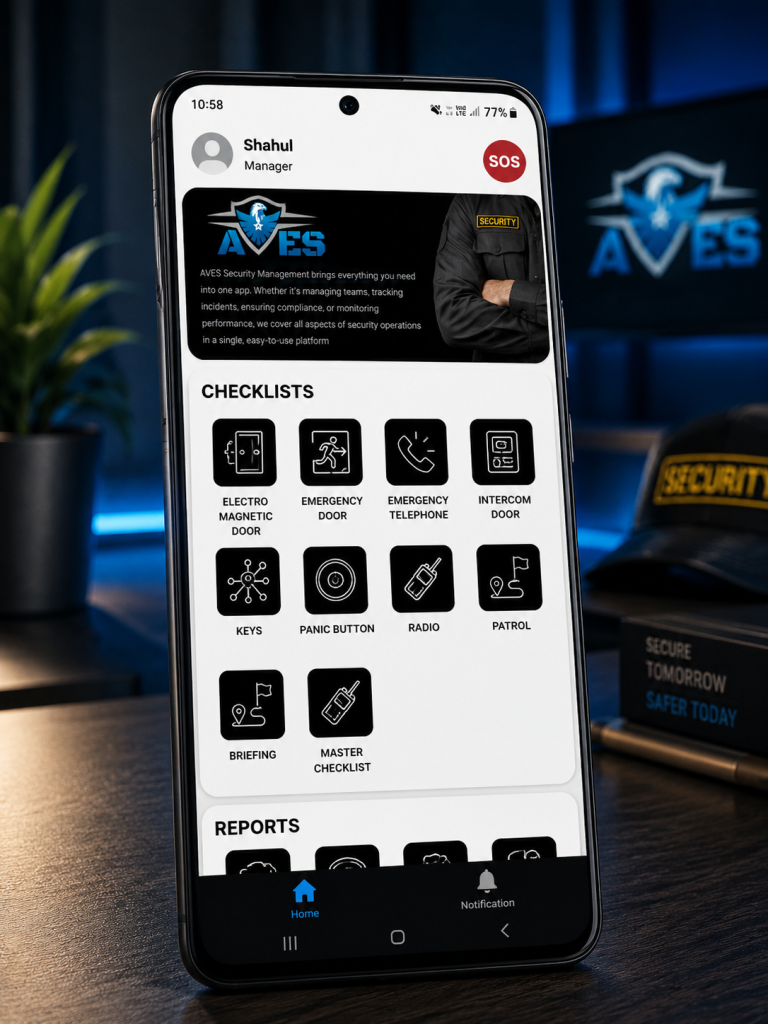
That’s the gap AVES Security Management System was built to close. Instead of a standalone paper witness statement form disconnected from everything else, statements live inside the same system as shift logs, incident reports and guard records. A supervisor pulls up an incident and sees the full picture in one place. No chasing four different documents.
Getting Started Without Blowing Up Your Whole Process
You don’t need to replace everything overnight. Start with the witness statement form itself. Get the fields right, make interpreter and language capture mandatory, require sign-off before a case can close.
Once that foundation is solid, connecting it to a broader digital guard management system stops feeling like a leap and starts feeling like the obvious next move.
Want to see what a properly structured witness statement form looks like inside a real guard management platform? AVES Security walks through exactly this setup, built around the same fields real security operations actually rely on. Head over to avessecurity.com and see how it fits into a complete paperless guard management workflow.
Frequently Asked Questions
What is a witness statement form used for in security operations?
It captures one person’s account of an incident, in their own words, tied to their identity. Used as evidence in hearings, claims and investigations.
How is a witness statement form different from an incident report?
An incident report is the supervisor’s summary. A witness statement form is one individual’s direct account, treated as separate evidence.
What fields should a witness statement form include?
Identity details like name, NRIC and language spoken, plus incident details like date, time, location, full account and sign-off.
Why does the interpreter field matter on a witness statement form?
Without it logged, a statement can be challenged later if the person wasn’t fluent in the language it was written in.
How soon after an incident should a witness statement form be filled out?
Right away, ideally on the spot. Memory accuracy drops fast within hours, so next-day statements are closer to guesswork.
Can a digital witness statement form hold up legally compared to paper?
Yes, often better. A timestamped digital record is harder to dispute than paper, which can be lost or altered.
Does AVES include a witness statement form?
Yes. It sits inside the same platform as shift logs, incident reports and guard records for a full incident picture in one place.
You don’t need to replace everything overnight. Start with the witness statement form itself. Get the fields right, make interpreter and language capture mandatory, require sign-off before a case can close.
Once that foundation is solid, connecting it to a broader digital guard management system stops feeling like a leap and starts feeling like the obvious next move.
Want to see what a properly structured witness statement form looks like inside a real guard management platform? AVES Security walks through exactly this setup, built around the same fields real security operations actually rely on. Head over to avessecurity.com and see how it fits into a complete paperless guard management workflow.