
A truck pulls up at the gate. Driver hands over a box, gets a signature, drives off. Nobody writes down what arrived, when or who signed for it. Feels like nothing. Barely worth pausing the shift for.
Three weeks later a client calls asking where their shipment went. And you realize… nothing was ever actually tracked. Just a chain of handoffs that nobody wrote down.
If that’s why you’re reading this, you’re not alone and you’re definitely not behind. Most security companies find this gap the same way after something’s already gone wrong, when it’s too late to fix that one incident but not too late to fix everything after it.
So let’s get into what real supplier management looks like for a security operation, why the gap matters more than people assume and how you close it without dumping extra work on your guards.
Why Supplier Management Gets Overlooked Until It’s a Problem
Most security teams treat access control and incident reports as the “real” job. Deliveries? That’s the side task. The thing that gets handled, not managed.
Understandable, honestly. A driver shows up, drops something, leaves. Doesn’t feel like the kind of moment that needs paperwork the way an incident does.
But here’s the thing an unlogged delivery is the same gap as an unrecorded key handover. Same gap as an unrecorded shift. If a client disputes what arrived, if something goes missing between the gate and its final stop or an invoice doesn’t line up with what actually showed up, your only defense is a timestamped record with a name on it. Nothing else holds up.
This is exactly why supplier management deserves to be a real priority, not something bolted on later. Sites with strict receiving windows. Offices that won’t take deliveries outside business hours. Facilities where weekend or holiday drop-offs need extra eyes. These places feel the gap hardest. No system and you’re leaning on a guard’s memory and a driver’s word, months after it happened.
What You’re Probably Worried About Right Now
First time looking into supplier management? A few worries are probably sitting in the back of your head, even if you haven’t said them out loud.
Will this slow my guards down. Is this yet another system to learn. Will people actually use it or will it end up like every other form filled out halfway, then forgotten.
Fair worries. They deserve real answers, not just reassurance. Doing this right doesn’t mean more work. It means the same handoff your guards already do, just captured in a way that actually holds up months later.
How Supplier Management Actually Works in Practice
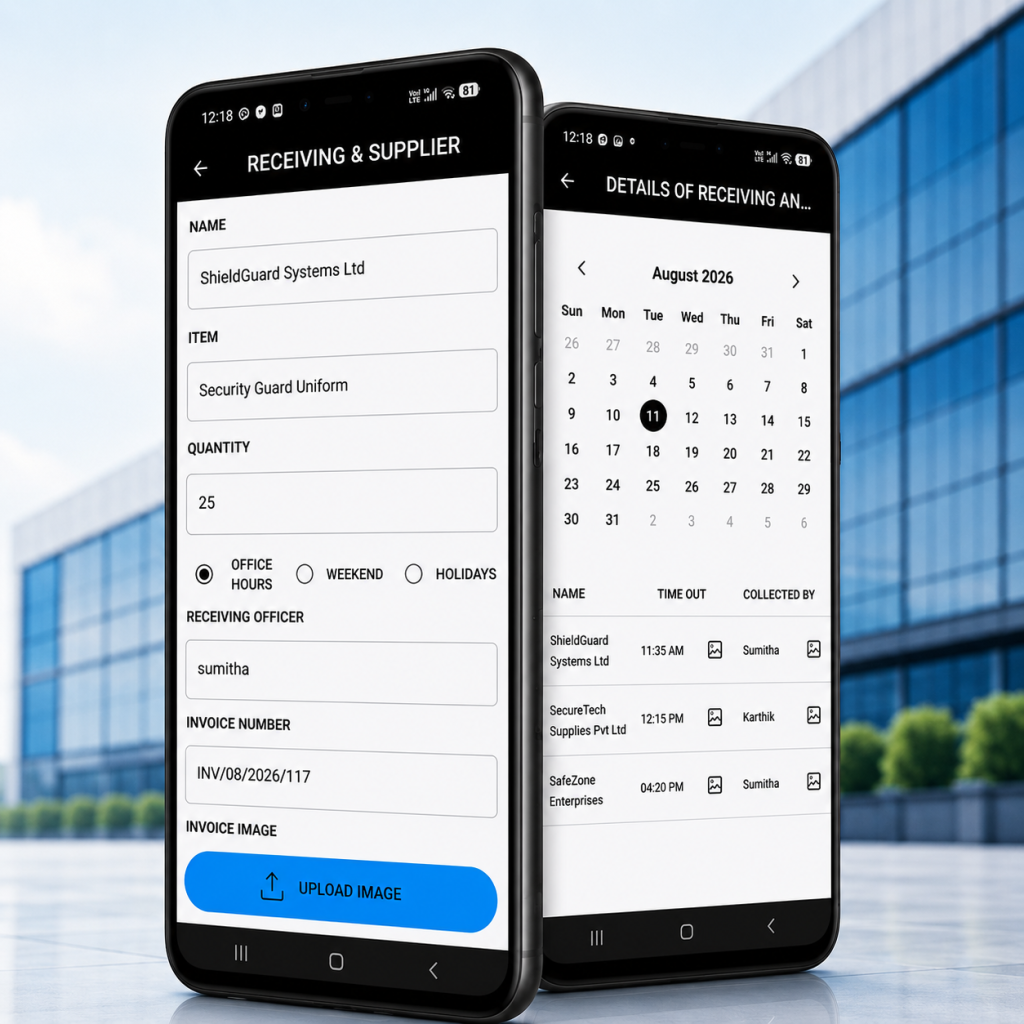
In AVES, this sits under a module called Receiving Supplier. Two actions, that’s it: Create and Records.
Create is where a guard logs a delivery as it happens name of the person or company delivering, the item, the quantity and a time-window selector (Office Hours, Weekend, Holidays) so anything unusual gets flagged right away instead of slipping through. The Receiving Officer field fills itself in based on who’s logged into the app, so there’s no guessing later about who actually took the delivery. Add an Invoice Number field and the option to snap a photo of the invoice and that’s the record.
Records is basically a calendar. Pick a date, see whatever got logged that day. Nothing there? It tells you straight up no data available for the selected date instead of leaving you wondering if the app just broke.
Think about the difference between a guard’s memory and an actual paper trail. Memory shifts. It softens details, fills gaps without meaning to, changes a little every time it gets retold. A dated record with a name, an invoice number and a photo attached doesn’t do any of that. It just sits there, exactly as it was.
What Good Supplier Management Doesn’t Include and Why That’s Fine
Let’s be straight about this, because overselling helps nobody. This is a receiving and delivery log. Not a full vendor management system. No contracts, no purchase orders, no approved supplier lists living in here.
You won’t find fields for ongoing vendor relationships, payment terms or supplier performance reviews. If your business needs that level of procurement machinery, what you’re getting here is the physical receiving side of things. Not the contractual side.
Knowing that going in saves you from expecting something that was never meant to be there. Good supplier management, for a security company, means proof of what happened at the gate. Not running your whole purchasing department.
The Mistakes That Undermine Supplier Management Even When the Tool Is Right
Having the right tool doesn’t automatically mean good supplier management. The habits around it matter just as much, maybe more.
Logging the delivery late is probably the most common one. Records pull by date, so an entry made hours later or the next morning, quietly misrepresents when the thing actually showed up. This only works as evidence if the timestamp is real.
Skipping the invoice photo when there’s one available. Takes a few extra seconds and it’s the first thing that gets dropped when people are busy. Funny enough, it’s also usually the exact piece of paper a dispute ends up hinging on.
Treating small deliveries like they don’t count. An envelope feels too tiny to log, until it’s the one thing someone’s asking about three weeks from now. Consistency means logging everything. Not just the stuff that feels important at the time.
Not checking the receiving officer field. It auto-fills based on whoever’s logged in, which sounds convenient until a shared device or a borrowed login quietly puts the wrong name on a delivery.
And then there’s the big one: treating a verbal handoff like it counts as a record. It doesn’t. If it never made it into the system, as far as your process is concerned, it never happened. Doesn’t matter how well everyone remembers it.
Building Confidence Before You Commit
Still on the fence about formalizing this? Here’s the honest trade-off. A little discipline now, a few extra seconds per delivery, buys you real protection later. Almost always a good trade.
The cost of skipping supplier management shows up when you least expect it. Most weeks, nothing happens and the whole thing feels like overkill. Then one dispute, one missing item, one client asking pointed questions and suddenly the entire investment pays for itself in a single conversation.
You don’t need to rebuild your whole operation to get here. You need one habit: log the delivery the second it happens. And a system simple enough that your guards actually keep doing it.
Frequently Asked Questions
What is supplier management for security companies?
It means tracking deliveries, vendors and goods received on-site creating a record of what arrived, when and who accepted it, instead of relying on informal handoffs at the gate.
How does AVES handle supplier management and deliveries?
Through a Receiving Supplier module with two views: Create, where a guard logs delivery details like item, quantity, time window and invoice and Records, a calendar showing everything logged for a given date.
Can I attach an invoice to a supplier management record in AVES?
Yes. The Create form has an Invoice Number field plus the option to upload a photo of the invoice, so the documentation lives right there with the record.
Does supplier management in AVES flag deliveries outside normal hours?
Yes the Create form includes a time-window selector for Office Hours, Weekend or Holidays, so your team can categorize and later review anything outside standard hours.
Is this a full vendor management system?
No. It logs physical deliveries and receiving details. No contract management, no purchase orders, no ongoing vendor relationship tracking.
How do I check what was received on a specific day?
Head to Records. It’s a calendar pick a date and it shows what was logged or tells you plainly if nothing was recorded.
What to Expect in the First Few Weeks
Rolling out supplier management for the first time usually goes through a predictable pattern, and knowing it in advance removes a lot of the anxiety.
Week one feels awkward. Guards forget to log a delivery here and there, not out of resistance, just because it’s a new habit competing with everything else they’re already tracking. This is normal, and it doesn’t mean the system has failed.
By week three, most teams settle into a rhythm where logging becomes automatic, the same way checking a badge or signing a visitor in became automatic once. The friction that felt real in week one fades once supplier management stops being a new task and becomes just part of how deliveries happen.
The companies that struggle long-term are usually the ones that gave up in week one, right when the habit was still forming. If you commit to the first month, consistent supplier management tends to take care of itself after that.
Where This Leaves You
Supplier management doesn’t have to be complicated and it shouldn’t slow your team down. It just needs to be consistent and it needs to produce a record that actually holds up the day someone questions it.
AVES keeps it in the same system your guards already use for shifts, incidents and attendance so a delivery record is something you pull up in seconds, invoice photo included, instead of trying to piece it together from a driver’s word weeks later.
Want to see how AVES handles supplier management and delivery records in practice? You can explore the platform and request a demo at avessecurity.com.