Here’s the truth. You’re not searching for access control software because you’re curious. You’re searching because something already went wrong.
A visitor walked in without a pass. A guard couldn’t find a key. A shift request got buried in a chat and nobody covered the gate. Sound familiar? That’s usually how this starts. Not curiosity. A problem that just exposed how much of your operation runs on spreadsheets and good intentions.
And if you’re hunting for the best access control software for a real security operation, you’ve probably got a few nagging worries too. Will this be too complicated for guards who barely have time to read a manual, let alone a training deck? Will it actually fix gate passes and keys or just add another login nobody bothers opening? Will you spend money on access control software and end up right back here in six months, typing the same search into Google?
Fair questions. All of them. So let’s answer them properly, using what actually matters when you’re evaluating access control software for a working security team, not some polished demo environment built to impress.
What Access Control Software Actually Needs to Do
Most access control software gets marketed around badges and doors. That’s only part of the job. Treat it as the whole job and you’ll find out the hard way that it isn’t.
For a security company running multiple sites, access control software has to juggle three things at once: who’s allowed where, who requested access and when and who’s holding the physical keys that open everything else. Miss one of those and the other two barely matter. Picture a three-legged stool. Two solid legs and one missing and it still tips over the moment someone leans on it.
That’s exactly why so many buyers feel burned after picking access control software that looked sharp on a sales call. Badges? Handled. Gate passes, key custody, request approvals? Never really touched.
Software for Access Control Should Cover the Gate, Not Just the Door
Here’s something most product pages conveniently leave out. Software for access control that only manages internal doors leaves your biggest exposure point wide open: the gate.
Think about it. Visitors, delivery drivers, contractors, vendors, they all pass through a gate before they ever reach a door. If your software for access control skips a proper gate pass management system, you’re still tracking that traffic on a clipboard or worse, a WhatsApp message to whichever guard happens to be on duty.
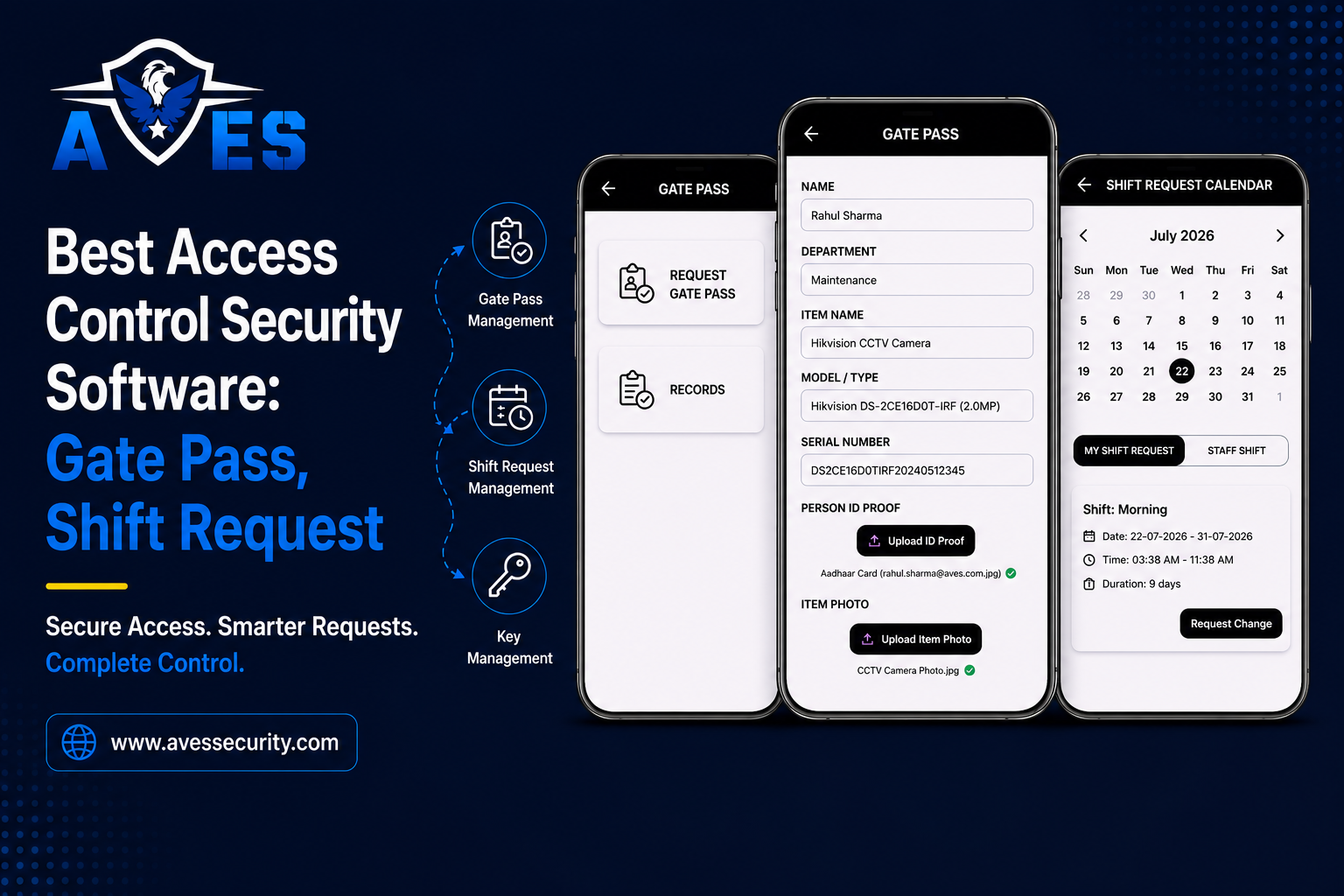
A real gate pass management system lets a guard issue, verify and log a visitor pass in seconds, straight from a phone, no phone calls, no waiting on approval. That one change kills the single most common complaint clients raise about security vendors: “why did it take fifteen minutes just to let my delivery in?”
Gate Pass Management System: What Buyers Discover Too Late
Most people evaluating a gate pass management system assume it’s basically a digital sign-in sheet. It’s not, and assuming otherwise is a mistake you’ll only notice later, during an audit or a furious client call, exactly when you can least afford it. For the full breakdown of pass types, approval chains and audit reporting, see our dedicated gate pass management guide.
A proper gate pass management system should:
- Log entry and exit times automatically, not from memory
- Attach a photo or ID scan to each visitor record
- Flag expired or unauthorised passes before a guard waves someone through
- Give supervisors a searchable record across every site, not just one
Skip this and you’re stuck reconstructing what happened after an incident, instead of pulling up a report that already has the answer sitting there. That gap? That’s exactly where client trust quietly erodes, one delayed answer at a time.
Request Management System: Why Shift Chaos Usually Starts Here
A request management system sounds small. Boring, even. Until you’re the one covering a shift nobody assigned you, because a swap request got lost somewhere in a text thread.
Here’s what beginners tend to miss. Guard shortages rarely happen because there aren’t enough guards. They happen because a request management system or the lack of one, fails to route a simple leave or swap request to the right supervisor in time.
The best access control software treats requests the same way it treats access itself, as something that needs approval, a timestamp and a record. A working request management system, like the one inside AVES’s scheduling module, lets a guard submit a leave or shift-swap request from their phone and get an answer the same day, with a supervisor approving or rejecting it in one tap.
Call it a minor convenience if you like. It’s really the difference between a site running short-staffed and a site staying fully covered.
Key Management Solutions: The Gap Almost Nobody Talks About
Search for access control software today and most results talk about badges and cameras. Almost nobody talks about the keys.
That’s a genuine blind spot. Key management solutions matter because physical keys are still how most buildings actually get opened, long after the badge system has already logged someone in and moved on.
Without proper key management solutions, you’re relying on a logbook or worse, someone’s memory, to know who’s holding a master key overnight. That’s a liability every security company eventually has to explain to a client, usually right after something’s gone missing.
Good key management solutions track who checked out which key, when it’s due back and fire off an alert the moment it’s overdue. Sounds simple, doesn’t it? But it closes a gap spreadsheets have never actually closed.
What to Look for Before You Buy Access Control Software
Skip the vendor with the longest feature list on their homepage. Look past the marketing and focus on whether the platform actually covers the full picture.
When comparing access control software, check for:
- A gate pass management system built in, not bolted on as an afterthought
- A request management system guards can genuinely use from their phone
- Key management solutions that log custody, not just issue a key once and forget it
- One dashboard across every site, not five separate logins
- Reports that are ready for a client or auditor without extra formatting
Missing more than one of these? You’re not buying access control software. You’re buying a badge reader with a nicer interface, nothing more.
Why AVES Was Built Around This Exact Gap
AVES Security Management System came out of watching the same pattern repeat, over and over, across growing security companies. Gate passes handled on paper. Keys tracked in someone’s head. Shift requests lost in a group chat nobody checks after hours.
AVES brings gate pass management, key management and request management into one platform instead of several disconnected tools. A guard logs a visitor at the gate, checks out a key or submits a shift request, all from the same app and a supervisor sees every bit of it from one dashboard.
That’s the real difference between access control software that looks complete on a sales page and software that actually holds up on a Tuesday night when three things go wrong at once.
Making the Decision With Confidence
You don’t need to overhaul everything overnight. Start by mapping out where your process actually breaks down most, whether that’s the gate, the key cabinet or shift coverage.
Once you know that, choosing between access control software options gets a lot simpler. You stop comparing feature lists. You start checking whether a platform actually closes the specific gap costing you time and trust right now.
If gate passes, keys and requests are still the parts of your operation running on paper or good faith, AVES was built to close exactly that gap. You can see how it works on a real site with a short demo, no long-term commitment needed to take a look.
Frequently Asked Questions (FAQ)
What makes access control software “the best” instead of just adequate?
The best option covers gates, keys and requests together, not badges alone. If a platform only handles one of those, it’s a partial fix, not a complete one.
Is access control software difficult for guards to learn?
Not if it’s built correctly. A good platform should take a guard less than a day to learn, since most of the work happens through simple taps, not manual data entry.
Does this kind of platform replace physical security guards?
No. It supports guards by removing paperwork and guesswork. It doesn’t replace the judgment a trained guard brings to a gate or a checkpoint.
How is a gate pass management system different from a normal visitor log?
A gate pass management system automates verification and flags problems in real time. A paper visitor log only records what happened after the fact, with no way to catch an issue before it becomes one.
CONTACT US
Website: https://avessecurity.com/
Linkedin: https://www.linkedin.com/company/aves-security-management-system/posts/?feedView=all
Instagram: https://www.instagram.com/avessecurity/